


Wong's Nursing Care of Infants and Children Australia and New Zealand Edition – For Professionals, 1st Edition
This new text has been adapted from the highly trusted Wong’s Nursing Care of Infants and Children to provide a reference for professional nurses working in paediatric and child and family health settings in Australia and New Zealand.
The content covers all aspects of infant, child and adolescent care, including anatomy and physiology, child and adolescent mental health, nursing care guidelines, critical thinking, family-centred care, rural and remote health, cultural and psychosocial considerations, common presenting conditions, and therapeutic management.
With input from leading local expert paediatric clinicians and academics, and carefully curated for practising paediatric nurses, and nurses newly entering paediatrics, the text aligns with local professional standards, health policies, legal and ethical considerations and population data.
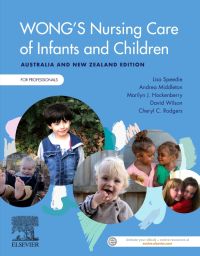
This new text has been adapted from the highly trusted Wong’s Nursing Care of Infants and Children to provide a reference for professional nurses working in paediatric and child and family health settings in Australia and New Zealand.
The content covers all aspects of infant, child and adolescent care, including anatomy and physiology, child and adolescent mental health, nursing care guidelines, critical thinking, family-centred care, rural and remote health, cultural and psychosocial considerations, common presenting conditions, and therapeutic management.
With input from leading local expert paediatric clinicians and academics, and carefully curated for practising paediatric nurses, and nurses newly entering paediatrics, the text aligns with local professional standards, health policies, legal and ethical considerations and population data.
Key Features
- Well-established, comprehensive text that focuses on clinical relevance for professional nurses
- Covers all aspects of infant, child and adolescent health through an assessment and management approach
- Foundational information builds a solid knowledge base in paediatric nursing
- Written to help nurses develop a deeper understanding of the psychosocial needs of infants, children, adolescents and their families
- Case studies and research questions to build critical thinking skills
- Aligned to National Safety and Quality Health Service (NSQHS) Standards
- User-friendly, accessible content suitable for practising paediatric nurses across a variety of clinical settings and geographic locations
- An eBook included in all print purchases
Author Information
| ISBN Number | 9780729543668 |
|---|---|
| Description Author List | By Lisa Speedie and Andrea Middleton |
| Copyright Year | 2022 |
| Edition Number | 1 |
| Format | Book |
| Trim | 216w x 276h (8.50" x 10.875") |
| Imprint | Elsevier |
| Page Count | 800 |
| Publication Date | 28 Oct 2021 |
| Stock Status | IN STOCK |


eBooks : Built for busy schedules & tailored for your goals.


Affordable knowledge, built for you
Get the resources you need-often at a lower cost than print. Quality content designed to support your goals, without stretching your budget.


Seamless access wherever you are


Always in sync


Tools the make learning stick
Your eBook is ready whenever you are!
1. Check your email for your access code.


2. Sign into or create your VitalSource account and redeem your code.


3. Open your eBook - ready whenever you are!
FAQ
The access code for your new eBook will be sent in your order confirmation email. Your code can also be accessed in your My Account section on the Elsevier webshop. If you do not receive your code within a few minutes, please check your spam folder.
Step-by-step guidance on how to download Bookshelf and also redeem your code can be found here.
The access code for your new eBook does not expire. However, we always suggest redeeming immediately after purchase to start experiencing the benefits of and insights from your purchase. Important to note - the code provided is a single use code and only valid for the edition you purchase. It does not provide access to past nor future editions of the title.
You will have unlimited access to your eBook on the device to which it was downloaded.
Discover the various learning features that our eBooks offer on the Bookshelf® Reader! For example, you can highlight different text passages, create notes and flashcards, have the text read to you, etc. Particularly practical: You can also use your eBooks offline. More information on the learning functions can be found on the Vitalsource page.
Quality is our top priority. That's why we collaborate with the leading eBook reader provider VitalSource. VitalSource has its own eBook reader Bookshelf®, which you can easily download. This reader is very user-friendly and offers more features than other standard readers. For example, you can highlight different text passages, create notes and flashcards, have the text read to you, etc. Particularly practical: You can also use your eBooks offline. More information can be found on the Vitalsource page.
Elsevier offers its eBooks in ePub format, as we believe this format is best suited to display our content ideally on as many devices as possible.
You can return your eBook within 13 days of purchase. eBooks that have been partially printed or flipped through more than 15% are excluded from returns.
Any questions ?
Top Picks from Our Community
1. Perspectives of pediatric nursing
2. Social, Cultural, Religious and Family Influences of Child Health Promotion
3. Hereditary Influences on Health Promotion of the Child and Family
Unit 2: Childhood and Family Assessment
4. Communication, physical and developmental assessment of the child and family
5. Pain assessment and management in children
6. Childhood communicable and infectious diseases - Australian
Unit 3: Family centred care of the Newborn
7. Health Promotion of the Newborn and Family
8. Health problems of the newborn
9. The High-Risk Newborn and Family
Unit 4: Family centred care of the Infant
10. Health promotion of the infant and family
11. Health Problems of the Infant
Unit 5: Family-centred Care of the Toddler and Preschooler
12. Health promotion of the toddler and family
13. Health promotion of the pre-schooler and family
14. Health problems of Early Childhood
Unit 6: Family-centred Care of the School-Aged Child
15. Health promotion of the School-age child and family
16. Health problems of the School-aged child
Unit 7: Family-centred Care of the Adolescent
17. Health Promotion of the Adolescent and Family
18. Health Problems of the Adolescent
Unit 8: Family Centred Care of the Child and Special Needs
19. Impact of Chronic Illness, Disability, or End of Life Care for the Child and Family
20. Impact of Cognitive or Sensory Impairment on the Child and Family
Unit 9: The child who is hospitalised
21. Family-centred care of the child during illness and hospitalization
22. Pediatric variations of nursing interventions – rural and remote focus
Unit 10: Childhood Nutrition and Elimination Problems
23. The Child and Fluid and Electrolyte Imbalance
24. The Child with Renal Dysfunction
25. The Child with Gastrointestinal Dysfunction
Unit 11: Childhood Oxygenation Problems
26. The child with respiratory dysfunction
Unit 12: Childhood Blood Production and Circulation Problems
27. The child with cardiovascular dysfunction
28. The child with hematologic or immunologic dysfunction
Unit 13: Childhood Regulatory Problems
29. The child with cancer
30. The child with cerebral dysfunction
31. The child with endocrine dysfunction
Unit 14: Childhood Physical Mobility Problems
32. The Child with Integumentary Dysfunction
33. The child with musculoskeletal or articular dysfunction
34. The child with neuromuscular or muscular dysfunction
Appendices - Answers to Critical Thinking Case Studies