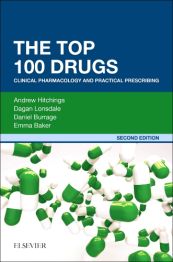
By Andrew W. Hitchings, BSc, MBBS, PhD, FRCP, FFICM, FHEA, FBPhS, Dagan Lonsdale, BSc(Hons) MBBS PhD MRCP FHEA FFICM, Daniel Burrage, BSc(Hons) MBBS MSc (Med Ed) MRCP FHEA and Emma Baker, MBChB PhD FRCP FBPhS
Now in its second edition, this highly successful guide to safe prescribing of the most common classes of drugs is your starting point for safe and effective practice.
The first edition was a direct response to requests from students for a compend
...view more
Now in its second edition, this highly successful guide to safe prescribing of the most common classes of drugs is your starting point for safe and effective practice.
The first edition was a direct response to requests from students for a compendium of the 100 most important drugs in the NHS. Research led by Professor Emma Baker identified the ‘top 100 drugs’ by their importance and prescribing frequency.
Now in its second edition, this highly successful guide to safe prescribing of the most common classes of drugs is your starting point for safe and effective practice.
The first edition was a direct response to requests from students for a compendium of the 100 most important drugs in the NHS. Research led by Professor Emma Baker identified the ‘top 100 drugs’ by their importance and prescribing frequency.
New to this edition
Double the number of self-assessment questions, from 50 to 100.
11 new drugs added and 11 dropped according the re-run research into the top 100 drugs in current use.
Key Features
The top 100 drugs and the five most important intravenous fluids are presented using a clear, consistent layout across double-page spreads.
Drugs are arranged alphabetically and also listed by organ system and clinical indication, providing multiple pathways into the information.
Clinical pharmacology is discussed under the headings: common indications; mechanisms of action; important adverse effects; warnings; and important interactions.
Practical prescribing is discussed under the headings: prescription; administration; communication; monitoring; and cost.
A clinical tip is presented for every drug.
Single-best-answer questions are provided for self-assessment and to show how information from several drugs may be integrated.
Author Information
By Andrew W. Hitchings, BSc, MBBS, PhD, FRCP, FFICM, FHEA, FBPhS, Reader in Clinical Pharmacology, St George’s, University of London, Honorary Consultant in Neurointensive Care, St George’s University Hospitals NHS Foundation Trust, London, UK; Dagan Lonsdale, BSc(Hons) MBBS PhD MRCP FHEA FFICM, Honorary Senior Lecturer, St George’s, University of London; Specialty Registrar in Clinical Pharmacology, General Medicine and Intensive Care Medicine, St George’s University Hospitals NHS Foundation Trust, London, UK; Daniel Burrage, BSc(Hons) MBBS MSc (Med Ed) MRCP FHEA, NIHR Doctoral Research Fellow, St George’s, University of London; Specialty Registrar in Clinical Pharmacology, General Medicine and Stroke Medicine, St George’s University Hospitals NHS Foundation Trust, London, UK; Emma Baker, MBChB PhD FRCP FBPhS, Professor of Clinical Pharmacology, St George’s University of London and Honorary Consultant Physician, St George’s University Hospitals NHS Foundation Trust, London, UK.
By Andrew W. Hitchings, BSc, MBBS, PhD, FRCP, FFICM, FHEA, FBPhS, Reader in Clinical Pharmacology, St George’s, University of London, Honorary Consultant in Neurointensive Care, St George’s University Hospitals NHS Foundation Trust, London, UK; Dagan Lonsdale, BSc(Hons) MBBS PhD MRCP FHEA FFICM, Honorary Senior Lecturer, St George’s, University of London; Specialty Registrar in Clinical Pharmacology, General Medicine and Intensive Care Medicine, St George’s University Hospitals NHS Foundation Trust, London, UK; Daniel Burrage, BSc(Hons) MBBS MSc (Med Ed) MRCP FHEA, NIHR Doctoral Research Fellow, St George’s, University of London; Specialty Registrar in Clinical Pharmacology, General Medicine and Stroke Medicine, St George’s University Hospitals NHS Foundation Trust, London, UK; Emma Baker, MBChB PhD FRCP FBPhS, Professor of Clinical Pharmacology, St George’s University of London and Honorary Consultant Physician, St George’s University Hospitals NHS Foundation Trust, London, UK.
"This updated book on the most commonly prescribed medications provides future practitioners with important information regarding pharmacology and practical prescribing in a way that is concise and easy to retrieve."
-Michael C Barros, Pharm.D., BCPS, BCACP, BC-ADM (Temple University School of Pharmacy) for Doody's Review Service
https://www.elsevierhealth.com.au/the-top-100-drugs-9780702074417.html317992The Top 100 Drugshttps://www.elsevierhealth.com.au/media/catalog/product/9/7/9780702074417_9.jpg24.7132.93AUDInStock/Medicine & Surgery/Clinical/General Medicine/Medicine & Surgery/Pharmacology/Medicine/Clinical/General Medicine/Medicine/Pharmacology/eBooks/eBooks/Medicine/Clinical/General Medicine/Medicine/Pharmacology433510243351295054591505460243887245054665580352858036101418269243350884886536505455357998925803526<p>Now in its second edition, this highly successful guide to safe prescribing of the most common classes of drugs is your starting point for safe and effective practice.</p>
<P></p>
<P>The first edition was a direct response to requests from students for a compendium of the 100 most important drugs in the NHS. Research led by Professor Emma Baker identified the ‘top 100 drugs’ by their importance and prescribing frequency. </p> <p>Now in its second edition, this highly successful guide to safe prescribing of the most common classes of drugs is your starting point for safe and effective practice.</p>
<P></p>
<P>The first edition was a direct response to requests from students for a compendium of the 100 most important drugs in the NHS. Research led by Professor Emma Baker identified the ‘top 100 drugs’ by their importance and prescribing frequency. </p>00add-to-cart97807020744172018StudentBy Andrew W. Hitchings, BSc, MBBS, PhD, FRCP, FFICM, FHEA, FBPhS, Dagan Lonsdale, BSc(Hons) MBBS PhD MRCP FHEA FFICM, Daniel Burrage, BSc(Hons) MBBS MSc (Med Ed) MRCP FHEA and Emma Baker, MBChB PhD FRCP FBPhS20192E-BookOtherElsevier31225 Oct 2018IN STOCKBy <STRONG>Andrew W. Hitchings</STRONG>, BSc, MBBS, PhD, FRCP, FFICM, FHEA, FBPhS, Reader in Clinical Pharmacology, St George’s, University of London, Honorary Consultant in Neurointensive Care, St George’s University Hospitals NHS Foundation Trust, London, UK; <STRONG>Dagan Lonsdale</STRONG>, BSc(Hons) MBBS PhD MRCP FHEA FFICM, Honorary Senior Lecturer, St George’s, University of London; Specialty Registrar in Clinical Pharmacology, General Medicine and Intensive Care Medicine, St George’s University Hospitals NHS Foundation Trust, London, UK; <STRONG>Daniel Burrage</STRONG>, BSc(Hons) MBBS MSc (Med Ed) MRCP FHEA, NIHR Doctoral Research Fellow, St George’s, University of London; Specialty Registrar in Clinical Pharmacology, General Medicine and Stroke Medicine, St George’s University Hospitals NHS Foundation Trust, London, UK; <STRONG>Emma Baker</STRONG>, MBChB PhD FRCP FBPhS, Professor of Clinical Pharmacology, St George’s University of London and Honorary Consultant Physician, St George’s University Hospitals NHS Foundation Trust, London, UK.eBooksE-BookUnited KingdomYesYesNoNoPlease SelectPlease SelectPlease Select