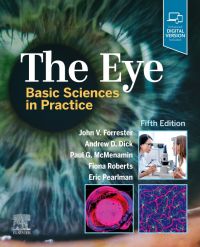
By John V. Forrester, MBChB, MD, FRCS(Ed), FRCP(Glasg) (Hon), FRCOphth (Hon), FMedSci, FRSE, FARVO, Andrew D. Dick, BSc, MB, BS, MD, FRCP, FRCS, FRCOphth, FMedSci, FARVO, Paul G McMenamin, BSc, MSc(MedSci), DSc (Med), PhD, Fiona Roberts, BSc, MBChB, MD, FRCPath and Eric Pearlman, BSc, PhD
The Eye: Basic Sciences in Practice provides highly accessible, one-stop coverage of all the essential basic science required by today’s ophthalmologists and optometrists in training. It is also core reading for those embarking on a career in visua
...view more
The Eye: Basic Sciences in Practice provides highly accessible, one-stop coverage of all the essential basic science required by today’s ophthalmologists and optometrists in training. It is also core reading for those embarking on a career in visual and ophthalmic science, as well as an invaluable, current refresher for the range of practitioners working in this area.
Building on previous success, this fifth edition has been fully revised in line with current curricula, key research developments and clinical best practice. It succinctly incorporates critical developments in fast-moving fields related to the eye and vision, including genetics, pharmacology, microbiology, immunology, pathology, neurophysiology, neuroanatomy and imaging. Topical coverage includes:
Major advances in the search for new genes underpinning disease in ophthalmology
The emergence of new infections such as Ebola, Zika and COVID-19
The importance of the gastrointestinal tract as an immune organ and its functional dependence on the microbiome
Key aspects of melanopsin, melatonin and new ways of light sensing
Also, (print purchasers) benefit from access to the complete, fully searchable electronic text, with integrated video and other bonus materials to further explain and expand on key concepts. This combines to make The Eye a more flexible, comprehensive and engaging learning package than ever before.
The Eye: Basic Sciences in Practice provides highly accessible, one-stop coverage of all the essential basic science required by today’s ophthalmologists and optometrists in training. It is also core reading for those embarking on a career in visual and ophthalmic science, as well as an invaluable, current refresher for the range of practitioners working in this area.
Building on previous success, this fifth edition has been fully revised in line with current curricula, key research developments and clinical best practice. It succinctly incorporates critical developments in fast-moving fields related to the eye and vision, including genetics, pharmacology, microbiology, immunology, pathology, neurophysiology, neuroanatomy and imaging. Topical coverage includes:
Major advances in the search for new genes underpinning disease in ophthalmology
The emergence of new infections such as Ebola, Zika and COVID-19
The importance of the gastrointestinal tract as an immune organ and its functional dependence on the microbiome
Key aspects of melanopsin, melatonin and new ways of light sensing
Also, (print purchasers) benefit from access to the complete, fully searchable electronic text, with integrated video and other bonus materials to further explain and expand on key concepts. This combines to make The Eye a more flexible, comprehensive and engaging learning package than ever before.
New to this edition
Key Features
The only all-embracing textbook of the basic sciences suitable for trainee ophthalmologists, optometrists and vision scientists.
Utilising an attractive page design with over 300 colour drawings and 200 photographs this is an attractive and accessible text to learn from.
The text presents in a readable form an account of all the basic sciences necessary for an understanding of the eye – anatomy, embryology, genetics, biochemistry, physiology, pharmacology, immunology, microbiology and infection and pathology.
Author Information
By John V. Forrester, MBChB, MD, FRCS(Ed), FRCP(Glasg) (Hon), FRCOphth (Hon), FMedSci, FRSE, FARVO, Professor of Ophthalmology and Head of Department of Ophthalmology, University of Aberdeen, UK; Section of Immunology and Infection, University of Aberdeen, UK; Ocular Immunology Program, The University of Western Australia, Australia; Centre for Experimental Immunology, Lions Eye Institute, Western Australia, Australia; Andrew D. Dick, BSc, MB, BS, MD, FRCP, FRCS, FRCOphth, FMedSci, FARVO, Professor of Ophthalmology and Head of Academic Unit of Ophthalmology, University of Bristol; Director, UCL-Institute of Ophthalmology, University College London, London, UK; Paul G McMenamin, BSc, MSc(MedSci), DSc (Med), PhD, Director of the Centre for Human Anatomy Education, Department of Anatomy & Developmental Biology, Monash University, Melbourne, Victoria, Australia; Fiona Roberts, BSc, MBChB, MD, FRCPath, Consultant Ophthalmic Pathologist, Queen Elizabeth University Hospital, and Honorary Senior Lecturer in Pathology, University Department of Pathology, Glasgow, UK; Eric Pearlman, BSc, PhD, Director, Institute of Immunology, Professor, Departments of Ophthalmology and Physiology, University of California, Irvine and Professor and Director of Research. Department of Ophthalmology and Visual Sciences, Case Western Reserve University.
By John V. Forrester, MBChB, MD, FRCS(Ed), FRCP(Glasg) (Hon), FRCOphth (Hon), FMedSci, FRSE, FARVO, Professor of Ophthalmology and Head of Department of Ophthalmology, University of Aberdeen, UK; Section of Immunology and Infection, University of Aberdeen, UK; Ocular Immunology Program, The University of Western Australia, Australia; Centre for Experimental Immunology, Lions Eye Institute, Western Australia, Australia; Andrew D. Dick, BSc, MB, BS, MD, FRCP, FRCS, FRCOphth, FMedSci, FARVO, Professor of Ophthalmology and Head of Academic Unit of Ophthalmology, University of Bristol; Director, UCL-Institute of Ophthalmology, University College London, London, UK; Paul G McMenamin, BSc, MSc(MedSci), DSc (Med), PhD, Director of the Centre for Human Anatomy Education, Department of Anatomy & Developmental Biology, Monash University, Melbourne, Victoria, Australia; Fiona Roberts, BSc, MBChB, MD, FRCPath, Consultant Ophthalmic Pathologist, Queen Elizabeth University Hospital, and Honorary Senior Lecturer in Pathology, University Department of Pathology, Glasgow, UK; Eric Pearlman, BSc, PhD, Director, Institute of Immunology, Professor, Departments of Ophthalmology and Physiology, University of California, Irvine and Professor and Director of Research. Department of Ophthalmology and Visual Sciences, Case Western Reserve University.
https://www.elsevierhealth.com.au/the-eye-9780702079931.html298873The Eyehttps://www.elsevierhealth.com.au/media/catalog/product/9/7/9780702079931_6.jpg164.66182.95AUDInStock/Medicine & Surgery/Ophthalmology/Books/Medicine/Ophthalmology/Books/Students/Specialty trainee/Books/Medicine/Ophthalmology/Japan Titles/Students/Specialty trainee/Medical Students/Trainee/Medical Students/Trainee4431210438872250545575054664505965452550395259837526316052616875310970531098114182692433508848865365054553505802451451205259833526155053030195303018<P>The Eye: Basic Sciences in Practice provides highly accessible, one-stop coverage of all the essential basic science required by today’s ophthalmologists and optometrists in training. It is also core reading for those embarking on a career in visual and ophthalmic science, as well as an invaluable, current refresher for the range of practitioners working in this area. </P>
<P></P>
<P>Building on previous success, this fifth edition has been fully revised in line with current curricula, key research developments and clinical best practice. It succinctly incorporates critical developments in fast-moving fields related to the eye and vision, including genetics, pharmacology, microbiology, immunology, pathology, neurophysiology, neuroanatomy and imaging. Topical coverage includes: </P>
<P></P>
<UL>
<P>
<LI>Major advances in the search for new genes underpinning disease in ophthalmology</LI>
<P></P>
<P>
<LI>The emergence of new infections such as Ebola, Zika and COVID-19</LI>
<P></P>
<P>
<LI>The importance of the gastrointestinal tract as an immune organ and its functional dependence on the microbiome</LI>
<P></P>
<P>
<LI>Key aspects of melanopsin, melatonin and new ways of light sensing</LI>
<P></P></UL>
<P></P>
<P>Also, (print purchasers) benefit from access to the complete, fully searchable electronic text, with integrated video and other bonus materials to further explain and expand on key concepts. This combines to make <B>The Eye</B> a more flexible, comprehensive and engaging learning package than ever before. </P> <P>The Eye: Basic Sciences in Practice provides highly accessible, one-stop coverage of all the essential basic science required by today’s ophthalmologists and optometrists in training. It is also core reading for those embarking on a career in visual and ophthalmic science, as well as an invaluable, current refresher for the range of practitioners working in this area. </P>
<P></P>
<P>Building on previous success, this fifth edition has been fully revised in line with current curricula, key research developments and clinical best practice. It succinctly incorporates critical developments in fast-moving fields related to the eye and vision, including genetics, pharmacology, microbiology, immunology, pathology, neurophysiology, neuroanatomy and imaging. Topical coverage includes: </P>
<P></P>
<UL>
<P>
<LI>Major advances in the search for new genes underpinning disease in ophthalmology</LI>
<P></P>
<P>
<LI>The emergence of new infections such as Ebola, Zika and COVID-19</LI>
<P></P>
<P>
<LI>The importance of the gastrointestinal tract as an immune organ and its functional dependence on the microbiome</LI>
<P></P>
<P>
<LI>Key aspects of melanopsin, melatonin and new ways of light sensing</LI>
<P></P></UL>
<P></P>
<P>Also, (print purchasers) benefit from access to the complete, fully searchable electronic text, with integrated video and other bonus materials to further explain and expand on key concepts. This combines to make <B>The Eye</B> a more flexible, comprehensive and engaging learning package than ever before. </P>00add-to-cart97807020799312020ProfessionalBy John V. Forrester, MBChB, MD, FRCS(Ed), FRCP(Glasg) (Hon), FRCOphth (Hon), FMedSci, FRSE, FARVO, Andrew D. Dick, BSc, MB, BS, MD, FRCP, FRCS, FRCOphth, FMedSci, FARVO, Paul G McMenamin, BSc, MSc(MedSci), DSc (Med), PhD, Fiona Roberts, BSc, MBChB, MD, FRCPath and Eric Pearlman, BSc, PhD20215Book191w x 235h (7.50" x 9.25")Approx. 660 illustrations (580 in full color)Elsevier56810 Nov 2020IN STOCKBy <STRONG>John V. Forrester</STRONG>, MBChB, MD, FRCS(Ed), FRCP(Glasg) (Hon), FRCOphth (Hon), FMedSci, FRSE, FARVO, Professor of Ophthalmology and Head of Department of Ophthalmology, University of Aberdeen, UK; Section of Immunology and Infection, University of Aberdeen, UK; Ocular Immunology Program, The University of Western Australia, Australia; Centre for Experimental Immunology, Lions Eye Institute, Western Australia, Australia; <STRONG>Andrew D. Dick</STRONG>, BSc, MB, BS, MD, FRCP, FRCS, FRCOphth, FMedSci, FARVO, Professor of Ophthalmology and Head of Academic Unit of Ophthalmology, University of Bristol; Director, UCL-Institute of Ophthalmology, University College London, London, UK; <STRONG>Paul G McMenamin</STRONG>, BSc, MSc(MedSci), DSc (Med), PhD, Director of the Centre for Human Anatomy Education, Department of Anatomy & Developmental Biology, Monash University, Melbourne, Victoria, Australia; <STRONG>Fiona Roberts</STRONG>, BSc, MBChB, MD, FRCPath, Consultant Ophthalmic Pathologist, Queen Elizabeth University Hospital, and Honorary Senior Lecturer in Pathology, University Department of Pathology, Glasgow, UK; <STRONG>Eric Pearlman</STRONG>, BSc, PhD, Director, Institute of Immunology, Professor, Departments of Ophthalmology and Physiology, University of California, Irvine and Professor and Director of Research. Department of Ophthalmology and Visual Sciences, Case Western Reserve University.BooksBookUnited KingdomNoNoNoNoPlease SelectPlease SelectPlease Select