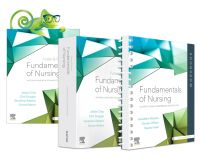
This suite of resources comprises Australia and New Zealand’s two leading fundamentals texts for nursing students, comprehensively updated and revised to reflect current practice and standards.
Potter and Perry’s Fundamentals of Nursing ANZ 6e i
...view more
This suite of resources comprises Australia and New Zealand’s two leading fundamentals texts for nursing students, comprehensively updated and revised to reflect current practice and standards.
Potter and Perry’s Fundamentals of Nursing ANZ 6e is the go-to reference for nursing students. Fully aligned to the curriculum, it covers the fundamentals of nursing care and supports the development of safe, effective and person-centred practice. Fundamentals of Nursing: Clinical Skills Workbook 4e is an essential companion to the core text. Clear instructions and reflective learning support students to apply the clinical skills they need confidently and effectively.
This value pack also includes Elsevier Adaptive Quizzing (EAQ) for Potter & Perry's Fundamentals of Nursing, ANZ 6e. Corresponding chapter-by-chapter to the core text, EAQ prepares students for tutorials, lectures and exams, with access to thousands of exam-style questions at your fingertips.
This suite of resources comprises Australia and New Zealand’s two leading fundamentals texts for nursing students, comprehensively updated and revised to reflect current practice and standards.
Potter and Perry’s Fundamentals of Nursing ANZ 6e is the go-to reference for nursing students. Fully aligned to the curriculum, it covers the fundamentals of nursing care and supports the development of safe, effective and person-centred practice. Fundamentals of Nursing: Clinical Skills Workbook 4e is an essential companion to the core text. Clear instructions and reflective learning support students to apply the clinical skills they need confidently and effectively.
This value pack also includes Elsevier Adaptive Quizzing (EAQ) for Potter & Perry's Fundamentals of Nursing, ANZ 6e. Corresponding chapter-by-chapter to the core text, EAQ prepares students for tutorials, lectures and exams, with access to thousands of exam-style questions at your fingertips.
New to this edition
Restructured to reflect current curriculum structure
New chapters on end-of-life care and primary care
New online chapter on nursing informatics aligned to the new National Nursing and Midwifery Digital Health Capabilities Framework, including a new skill and competency assessment tool
New skills on blood-glucose levels; Doppler for assessment of pulses; bladder scan; and nursing informatics, as well as an updated skill on neurovascular assessment
Key Features
Potter & Perry’s Fundamentals of Nursing – ANZ, 6th Edition
79 Clinical Skills over 41 chapters updated to reflect latest evidence and practice standards, including 4 new skills
Fully aligned to local learning and curriculum outcomes, 2016 NMBA Registered Nurse Standards for Practice and National Safety and Quality Health Service Standards
44 clinical skills videos (including 5 NEW) available on Evolve, along with additional student and instructor resources
Easy-to-understand for first-year students
A focus on person-centred practice and language throughout
An eBook included in all print purchases
Companion Fundamentals of Nursing: Clinical Skills Workbook, 4th Edition
81 updated clinical skills (including4 NEW), linking applied nursing skills to real-word practice
Extended skillsto those in the core text to reflect more advanced practice
Figuresnow included to illustrate particular steps in a skill
Amended Bondy rating scale for a generic assessment
An eBook included in all print purchases
Elsevier Adaptive Quizzing for Potter & Perry's Fundamentals of Nursing, ANZ 6e
Over 2,450 self-quizzing questions that allows students to advance at their own pace — based on performance — through multiple mastery levels for each chapter
A comprehensive dashboard allows students to view their progress, and identify areas of strength and weakness
Author Information
By Jackie Crisp, RN, PhD, Consultant – Leadership and Culture Change in Healthcare, Sydney, NSW; Clint Douglas, RN, BN, MClinEpi, MMedStat, PhD, FACN, Professor and Nursing Chair, Faculty of Health QUT School of Nursing & Metro North Hospital and Health Service, QLD; Geraldine Rebeiro, RN, Midwife, B.AppSci (Adv Nsng), B.Ed Studs, M.Ed, PhD, MACN, Associate National Course Coordinator - Bachelor of Nursing/Bachelor of Business Administration, Senior Lecturer (Melbourne) School of Nursing, Midwifery & Paramedicine (Vic) ACU, Melbourne; Donna Waters, RN, Paed Cert, BA, MPH, PhD, FACN, Professor, Sydney Nursing School, Faculty of Medicine and Health, The University of Sydney; Plowman Evan, MN, BN, BClinPrac(Paramedics), Lecturer in Nursing
Charles Sturt University
Boorooma St
Building 2, Wagga Wagga Campus
Wagga Wagga, NSW, 2650
Australia; Damian Wilson, RN, BNurs, Grad Cert Emerg Nurs, Grad CertEd (HEd), MNurs (Emerg Care), MACN, MCENA, Associate Nurse Unit Manager Emergency Department Sunshine Hospital, Victoria and Stacey Fuller, RN, BSc(Nurs), GradCert(CritCare), GradCert(HlthProfEd), Staff Development Educator, Sir Charles Gairdner Hospital, Nedlands, Western Australia, Australia
By Jackie Crisp, RN, PhD, Consultant – Leadership and Culture Change in Healthcare, Sydney, NSW; Clint Douglas, RN, BN, MClinEpi, MMedStat, PhD, FACN, Professor and Nursing Chair, Faculty of Health QUT School of Nursing & Metro North Hospital and Health Service, QLD; Geraldine Rebeiro, RN, Midwife, B.AppSci (Adv Nsng), B.Ed Studs, M.Ed, PhD, MACN, Associate National Course Coordinator - Bachelor of Nursing/Bachelor of Business Administration, Senior Lecturer (Melbourne) School of Nursing, Midwifery & Paramedicine (Vic) ACU, Melbourne; Donna Waters, RN, Paed Cert, BA, MPH, PhD, FACN, Professor, Sydney Nursing School, Faculty of Medicine and Health, The University of Sydney; Plowman Evan, MN, BN, BClinPrac(Paramedics), Lecturer in Nursing
Charles Sturt University
Boorooma St
Building 2, Wagga Wagga Campus
Wagga Wagga, NSW, 2650
Australia; Damian Wilson, RN, BNurs, Grad Cert Emerg Nurs, Grad CertEd (HEd), MNurs (Emerg Care), MACN, MCENA, Associate Nurse Unit Manager Emergency Department Sunshine Hospital, Victoria and Stacey Fuller, RN, BSc(Nurs), GradCert(CritCare), GradCert(HlthProfEd), Staff Development Educator, Sir Charles Gairdner Hospital, Nedlands, Western Australia, Australia
Part 1 Evolving nursing: nursing and the healthcare environment 1. Creating a proactive and dynamic nursing profession 2. Building nursing practice: The Fundamentals of Care Framework 3. Engaging patients and keeping them safe 4. Enabling cultural safety 5. Partnering in care Part 2 Framing nursing: critical processes in nursing practice 6. Developing clinical reasoning for nursing practice 7. Gathering relevant information and making decisions 8. Setting priorities, taking action and evaluating outcomes 9. Generating and using nursing knowledge Part 3 Positioning nursing: professional responsibility and accountability for safe and effective care 10. Collaborating for integrated care 11. Examining the ethical practice of nursing 12. Practising nursing within Australian regulatory frameworks 13. Acting in accordance with New Zealand regulatory frameworks 14. Placing communication at the heart of person-centred care 15. Putting the ‘e’ in health Part 4 Practising nursing: Fundamentals of Care for quality and safety 16. The vital signs: using a primary survey approach for patient assessment 17. Undertaking a focused assessment: physical assessment of body systems 18. Preventing and controlling infection 19. Optimising skin integrity and wound care 20. Ensuring medication safety 21. Promoting mobility 22. Assessing and managing pain 23. Supporting oxygenation and perfusion 24. Balancing fluid, electrolyte and acid–base 25. Meeting nutritional needs 26. Maintaining hygiene 27. Managing continence: urinary 28. Managing continence: bowel 29. Fostering sleep Part 5 Adapting nursing: life stages and transitions 30. Considering the developmental context from conception to adolescence 31. Considering the developmental context of youth and adults 32. Considering the older person 33. Considering the person with disability 34. Considering sexuality and sexual health 35. Managing mental health and wellbeing 36. Considering end-of-life care Part 6 Adapting nursing: contexts of care 37. Working in the aged care sector 38. Working in primary and community health sectors 39. Working in the acute care sector 40. Working in the mental sector
Fundamentals of Nursing Clinical Skills workbook, 4th Edition
Mapped to Potter & Perry’s Fundamentals of Nursing 6e
Chapter/ Skills
Chapter 14 Placing communication at the heart of person-centred care 14-1 Patient handover
Chapter 16 Monitoring vital signs: using a primary survey approach for patient assessment 16-1 Assessing respirations 16-2 Measuring oxygen saturation (SpO2) 16-3 Assessing the radial and apical pulses 16-4 Measuring blood pressure (BP) 16-5 Measuring body temperature
Chapter 17 Undertaking a focused assessment: Physical assessment of body systems 17-1 Nursing physical assessment using a body systems framework 17-2 Focused neurological assessment 17-3 Focused cardiovascular assessment 17-4 Focused respiratory assessment 17-5 Focused gastrointestinal assessment 17-6 Focused renal assessment 17-7 Focused musculoskeletal assessment 17-8 Focused skin or integumentary assessment
Chapter 18 Understanding infection control 18-1 Hand washing 18-2 Preparing an aseptic field 18-3 Surgical hand antisepsis (‘scrubbing’): preparing for gowning and gloving 18-4 Open gloving 18-5 Donning a sterile gown and performing closed gloving
Chapter 19 Optimising skin integrity and wound care 19-1 Performing a bacterial wound swab 19-4 Performing a wound dressing 19-2 Assessment, management and prevention of skin tears 19-3 Assessment for risk of pressure injury
Chapter 20 Ensuring medication safety 20-1 Administering oral medications 20-2 Administering nasal instillations 20-3 Administering ophthalmic medications 20-4 Administering vaginal medications 20-5 Administering rectal suppositories 20-6 Using metred-dose inhalers (MDIs) 20-7 Preparing injections 20-8 Administering injections 20-9 Adding medications to intravenous fluid containers 20-10 Administering medications by intravenous bolus 20-11 Administering intravenous medications by a secondary infusion 20-12 Administering intravenous medications by a syringe driver/mini-Infuser pump (New)
Chapter 21 Preventing and managing immobility 21-1 Applying sequential compression devices (SCDs) 21-2 Compression stockings 21-3 Positioning patients in bed 21-4 Transfer techniques
Chapter 22 Assessing and managing pain 22-1 Focused pain assessment
Chapter 23 Supporting oxygenation and perfusion 23-1 Using a hand-held doppler ultrasound probe to assess peripheral pulses (New) 23-2 Continuous Cardiac Monitoring (CCM) 23-3 Conducting a 12 Lead ECG 23-4 Suctioning 23-5 Care of patients with chest tubes 23-6 Applying a nasal cannula or oxygen mask 23-7 Cardiopulmonary resuscitation – basic life support
Chapter 24 Balancing fluid, electrolyte and acid-base status 24-1 Assessment of fluid status 24-2 Subcutaneous infusion (hypodermoclysis) 24-3 Initiating a peripheral intravenous (IV) infusion 24-4 Regulating intravenous flow rate 24-5 Changing intravenous solution and infusion tubing 24-6 Changing a peripheral intravenous dressing 24-7 Care of the patient requiring a blood transfusion Advanced Skills Management of Central Venous Catheters (CVC) Adv. Skill 1 Regulating CVC intravenous flow rate Adv. Skill 2 CVC dressing change and flush
Chapter 25 Meeting nutritional needs 25-1 Inserting a small-bore nasoenteric tube for enteral feedings 25-2 Administering enteral feedings via nasoenteric tubes 25-3 Administering enteral feedings via gastrostomy or jejunostomy tube 25-4 Blood glucose levels (NEW)
Chapter 26 Ongoing hygiene 26-1 Bathing a person 26-2 Perineal care 26-3 Menstrual hygiene 26-4 Administering a back rub 26-5 Performing nail and foot care 26-6 Providing oral hygiene 26-7 Performing mouth care for an unconscious or debilitated client 26-8 Caring for the person with contact lenses 26-9 Making an occupied bed 26-10 Making a post-operative bed
https://www.elsevierhealth.com.au/potter-perrys-fundamentals-of-nursing-anz-6th-edition-and-fundamentals-of-nursing-clinical-skills-workbook-4th-edition-value-pack-9780729544184.html299150Potter & Perry’s Fundamentals of Nursing – ANZ, 6th Edition and Fundamentals of Nursing: Clinical Skills Workbook, 4th Edition Value Packhttps://www.elsevierhealth.com.au/media/catalog/product/9/7/9780729544184_3.jpg176.21234.95AUDInStock/Books/Australian Titles/Books/Japan Titles4388722438872152550395263160141826925145120<P>This suite of resources comprises Australia and New Zealand’s two leading fundamentals texts for nursing students, comprehensively updated and revised to reflect current practice and standards.</P><I>
<P>Potter and Perry’s Fundamentals of Nursing ANZ 6e</I> is the go-to reference for nursing students. Fully aligned to the curriculum, it covers the fundamentals of nursing care and supports the development of safe, effective and person-centred practice. <I>Fundamentals of Nursing: Clinical Skills Workbook 4e </I>is an essential companion to the core text. Clear instructions and reflective learning support students to apply the clinical skills they need confidently and effectively.</P>
<P></P>
<P>This value pack also includes <I>Elsevier Adaptive Quizzing (EAQ) for Potter & Perry's Fundamentals of Nursing, ANZ 6e. </I>Corresponding chapter-by-chapter to the core text, EAQ prepares students for tutorials, lectures and exams, with access to thousands of exam-style questions at your fingertips.</P> <P>This suite of resources comprises Australia and New Zealand’s two leading fundamentals texts for nursing students, comprehensively updated and revised to reflect current practice and standards.</P><I>
<P>Potter and Perry’s Fundamentals of Nursing ANZ 6e</I> is the go-to reference for nursing students. Fully aligned to the curriculum, it covers the fundamentals of nursing care and supports the development of safe, effective and person-centred practice. <I>Fundamentals of Nursing: Clinical Skills Workbook 4e </I>is an essential companion to the core text. Clear instructions and reflective learning support students to apply the clinical skills they need confidently and effectively.</P>
<P></P>
<P>This value pack also includes <I>Elsevier Adaptive Quizzing (EAQ) for Potter & Perry's Fundamentals of Nursing, ANZ 6e. </I>Corresponding chapter-by-chapter to the core text, EAQ prepares students for tutorials, lectures and exams, with access to thousands of exam-style questions at your fingertips.</P>00add-to-cart97807295441842020ProfessionalBy Jackie Crisp, RN, PhD, Clint Douglas, RN, BN, MClinEpi, MMedStat, PhD, FACN, Geraldine Rebeiro, RN, Midwife, B.AppSci (Adv Nsng), B.Ed Studs, M.Ed, PhD, MACN, Donna Waters, RN, Paed Cert, BA, MPH, PhD, FACN, Plowman Evan, MN, BN, BClinPrac(Paramedics), Damian Wilson, RN, BNurs, Grad Cert Emerg Nurs, Grad CertEd (HEd), MNurs (Emerg Care), MACN, MCENA and Stacey Fuller, RN, BSc(Nurs), GradCert(CritCare), GradCert(HlthProfEd)20212BookOtherElsevier027 Oct 2020IN STOCKBy <STRONG>Jackie Crisp</STRONG>, RN, PhD, Consultant – Leadership and Culture Change in Healthcare, Sydney, NSW; <STRONG>Clint Douglas</STRONG>, RN, BN, MClinEpi, MMedStat, PhD, FACN, Professor and Nursing Chair, Faculty of Health QUT School of Nursing & Metro North Hospital and Health Service, QLD; <STRONG>Geraldine Rebeiro</STRONG>, RN, Midwife, B.AppSci (Adv Nsng), B.Ed Studs, M.Ed, PhD, MACN, Associate National Course Coordinator - Bachelor of Nursing/Bachelor of Business Administration, Senior Lecturer (Melbourne) School of Nursing, Midwifery & Paramedicine (Vic) ACU, Melbourne; <STRONG>Donna Waters</STRONG>, RN, Paed Cert, BA, MPH, PhD, FACN, Professor, Sydney Nursing School, Faculty of Medicine and Health, The University of Sydney; <STRONG>Plowman Evan</STRONG>, MN, BN, BClinPrac(Paramedics), Lecturer in Nursing
Charles Sturt University
Boorooma St
Building 2, Wagga Wagga Campus
Wagga Wagga, NSW, 2650
Australia; <STRONG>Damian Wilson</STRONG>, RN, BNurs, Grad Cert Emerg Nurs, Grad CertEd (HEd), MNurs (Emerg Care), MACN, MCENA, Associate Nurse Unit Manager Emergency Department Sunshine Hospital, Victoria and <STRONG>Stacey Fuller</STRONG>, RN, BSc(Nurs), GradCert(CritCare), GradCert(HlthProfEd), Staff Development Educator, Sir Charles Gairdner Hospital, Nedlands, Western Australia, AustraliaBooksBookAustraliaNoNoNoNoPlease SelectPlease SelectPlease Select