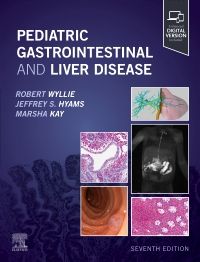
Accessible, practical, and focused on diagnosis and treatment, Pediatric Gastrointestinal and Liver Disease, Seventh Edition, covers the entire spectrum of pediatric GI, hepatic, and nutritional disorders. This popular reference offers definitive gui
...view more
Accessible, practical, and focused on diagnosis and treatment, Pediatric Gastrointestinal and Liver Disease, Seventh Edition, covers the entire spectrum of pediatric GI, hepatic, and nutritional disorders. This popular reference offers definitive guidance from experienced editors Drs. Robert Wyllie, Jeffrey S. Hyams, and Marsha Kay, as well as globally renowned contributors who share their knowledge and expertise on complex issues. Full-color illustrations, review questions online, real-world case studies, and detailed instruction on performing key procedures ensure that this updated edition remains your reference of choice in this fast-changing area.
Accessible, practical, and focused on diagnosis and treatment, Pediatric Gastrointestinal and Liver Disease, Seventh Edition, covers the entire spectrum of pediatric GI, hepatic, and nutritional disorders. This popular reference offers definitive guidance from experienced editors Drs. Robert Wyllie, Jeffrey S. Hyams, and Marsha Kay, as well as globally renowned contributors who share their knowledge and expertise on complex issues. Full-color illustrations, review questions online, real-world case studies, and detailed instruction on performing key procedures ensure that this updated edition remains your reference of choice in this fast-changing area.
Key Features
Includes significantly updated coverage of the gut microbiome; new biologic therapies for the treatment of pediatric inflammatory bowel diseases; advancements in the treatment of pediatric liver diseases, including metabolic-associated fatty liver disease (MAFLD); and new diagnostic imaging techniques
Features a robust art program with full-color anatomical figures, clinical photos, and other illustrations throughout the text
Details key procedures such as esophagogastroduodenoscopy and related techniques; colonoscopy and polypectomy; endoscopic retrograde cholangiopancreatography and endoscopic ultrasound; capsule endoscopy and small bowel enteroscopy; GI motility procedures; and more
Prepares you for certification and recertification with more than 400 board-style review questions, answers, and rationales online
Contains numerous algorithms that provide quick and easy retrieval of diagnostic, screening, and treatment information, as well as detailed diagrams that accurately illustrate complex concepts and provide at-a-glance recognition of disease processes
An ideal everyday resource for pediatric gastroenterologists and hepatologists, pediatric dieticians and nutritionists, pediatricians, family medicine practitioners, PAs, and NPs
An eBook version is included with purchase. The eBook allows you to access all of the text, figures and references, with the ability to search, customize your content, make notes and highlights, and have content read aloud. Additional digital ancillary content may publish up to 6 weeks following the publication date
Author Information
Edited by Robert Wyllie, MD, Chief of Medical Operations, Associate Chief of Staff, Cleveland Clinic, Professor of Pediatrics, Lerner College of Medicine, Case Western Reserve University, Cleveland, Ohio, USA; Jeffrey S. Hyams, MD, Head, Division of Digestive Diseases, Hepatology, and Nutrition, Connecticut Children's Medical Center, Hartford, Connecticut; Professor of Pediatrics, University of Connecticut School of Medicine, Farmington, Connecticut, USA and Marsha Kay, MD, Chair, Department of Pediatric Gastroenterology and Nutrition, Director, Pediatric Endoscopy, Cleveland Clinic Children’s Hospital, Cleveland, Ohio, USA
Edited by Robert Wyllie, MD, Chief of Medical Operations, Associate Chief of Staff, Cleveland Clinic, Professor of Pediatrics, Lerner College of Medicine, Case Western Reserve University, Cleveland, Ohio, USA; Jeffrey S. Hyams, MD, Head, Division of Digestive Diseases, Hepatology, and Nutrition, Connecticut Children's Medical Center, Hartford, Connecticut; Professor of Pediatrics, University of Connecticut School of Medicine, Farmington, Connecticut, USA and Marsha Kay, MD, Chair, Department of Pediatric Gastroenterology and Nutrition, Director, Pediatric Endoscopy, Cleveland Clinic Children’s Hospital, Cleveland, Ohio, USA
Section 1: Biologic Aspects of Gastrointestinal Function 1. Development of the Gastrointestinal Tract 2. Basic Aspects of Digestion and Absorption 3. Bile Acid Physiology and Alterations in the Enterohepatic Circulation 4. The Gut Microbiome in Pediatrics
Section 2: Clinical Problems 5. Gastrointestinal Mucosal Immunology and Mechanisms of Inflammation 6. Chronic Abdominal Pain of Childhood and Adolescence 7. Approach to the Child With a Disorder of Gut-Brain Interaction 8. Vomiting and Nausea 9. Diarrhea 10. Colic and Gastrointestinal Gas 11. Functional Constipation and Fecal Incontinence 12. Growth Faltering (Failure to Thrive) 13. Gastrointestinal Hemorrhage 14. Obesity 15. Eating Disorders in Children and Adolescents 16. Jaundice: Unconjugated Hyperbilirubinemia 17. Ascites 18. Caustic Ingestion and Foreign Bodies
Section 3: The Esophagus 19. Developmental Anatomy and Physiology of the Esophagus 20. Congenital Malformations of the Esophagus 21. Gastroesophageal Reflux 22. Achalasia and Other Motor Disorders 23. Other Diseases of the Esophagus
Section 4: The Stomach 24. Developmental Anatomy and Physiology of the Stomach 25. Congenital Anomalies and Surgical Disorders of the Stomach 26. Gastritis, Gastropathy, and Ulcer Disease 27. Helicobacter pylori in Childhood 28. Gastric Motility Disorders 29. Bezoars
Section 5: The Small and Large Intestine 30. Anatomy and Physiology of the Small and Large Intestines 31. Maldigestion and Malabsorption 32. Protracted Diarrhea 33. Protein-Losing Enteropathy 34. Celiac Disease 35. Short Bowel Syndrome 36. Surgical Management of Pediatric Gut Failure: Decades of Innovation and Integration With Rewarding Long-term Outcomes 37. Allergic and Eosinophilic Gastrointestinal Disease 38. Infectious Diarrhea 39. Enteric Parasites 40. Gastrointestinal Manifestations of Immunodeficiency 41. Pediatric Polyposis Syndromes 42. Crohn’s Disease 43. Ulcerative Colitis in Children and Adolescents 44. Chronic Intestinal Pseudo-Obstruction 45. Neonatal Necrotizing Enterocolitis 46. Disorders of the Anorectum Fissures, Fistulas, Prolapse, Hemorrhoids, Tags 47. Neoplasms of the Gastrointestinal Tract 48. Neoplasms of the Liver 49. Other Diseases of the Small Intestine and Colon 50. Appendicitis
Section 6: Pediatric Surgical Disorders 51. Intussusception in Infants and Children 52. Inguinal Hernias and Hydroceles 53. Meckel Diverticula and Omphalomesenteric Duct Remnants 54. Hirschsprung Disease 55. Imperforate Anus 56. Abnormal Rotation and Fixation of the Intestine 57. Small and Large Bowel Stenosis and Atresias 58. Newborn Abdominal Wall Defects 59. Gastrostomy, Jejunostomy, and Stomas of the Small and Large Intestine
Section 7: Gastrointestinal Procedures 60. Esophagogastroduodenoscopy and Related Techniques 61. Colonoscopy, Polypectomy, and Related Techniques 62. Endoscopic Retrograde Cholangiopancreatography & Endoscopic Ultrasound 63. Capsule Endoscopy and Small Bowel Enteroscopy 64. Gastrointestinal Motility Procedures 65. Gastrointestinal Pathology 66. Liver Pathology 67. Anesthesia and Sedation for Pediatric Gastroenterology Procedures and Patients
Section 8: The Liver and Bile Ducts 68. Structural and Functional Development of the Hepatobiliary System 69. Neonatal Hepatitis 70. Biliary Atresia and Neonatal Disorders of the Bile Ducts 71. Pediatric Cholestatic Liver Disease 72. Mitochondrial Hepatopathies: Disorders of Fatty Acid Oxidation and the Respiratory Chain 73. Abnormalities of Hepatic Protein Metabolism 74. Abnormalities of Carbohydrate Metabolism and the Liver 75. Nonalcoholic Fatty Liver Disease 76. Acute and Chronic Hepatitis 77. Portal Hypertension 78. Liver Failure 79. Liver Transplantation in Children 80. Diseases of the Gallbladder
Section 9: The Pancreas 81. Pancreatic Development 82. Cystic Fibrosis and Congenital Anomalies of the Exocrine Pancreas 83. Pancreatitis 84. Total Pancreatectomy With Islet Autotransplantation 85. Pancreatic Neuroendocrine Tumors
Section 10: Nutrition 86. Infant and Toddler Nutrition 87. Nutritional Assessment 88. Tubes for Enteric Access 89. Parenteral Nutrition 90. Enteral Nutrition 91. Management of Diarrhea 92. Effects of Digestive Diseases on Bone Metabolism 93. Nutrition and Feeding for Children With Developmental Disabilities 94. Fecal Transplant
https://www.elsevierhealth.com.au/pediatric-gastrointestinal-and-liver-disease-9780443117602.html323500Pediatric Gastrointestinal and Liver Diseasehttps://www.elsevierhealth.com.au/media/catalog/product/9/7/9780443117602_1.jpg406.75451.95AUDInStock/Medicine/Gastroenterology & Hepatology/Books/Medicine & Surgery/Gastroenterology & Hepatology/Books/Medicine/Gastroenterology & Hepatology/Books/Japan Titles50546075054664433513943887225259894525503952631601488653650545534182692433508851451205259833<b>Accessible, practical, and focused on diagnosis and treatment</b>, <i>Pediatric Gastrointestinal and Liver Disease, Seventh Edition</i>, covers the entire spectrum of pediatric GI, hepatic, and nutritional disorders. This popular reference offers definitive guidance from experienced editors Drs. Robert Wyllie, Jeffrey S. Hyams, and Marsha Kay, as well as globally renowned contributors who share their knowledge and expertise on complex issues. <b>Full-color illustrations, review questions online, real-world case studies, and detailed instruction on performing key procedures</b> ensure that this updated edition remains your reference of choice in this fast-changing area. <b>Accessible, practical, and focused on diagnosis and treatment</b>, <i>Pediatric Gastrointestinal and Liver Disease, Seventh Edition</i>, covers the entire spectrum of pediatric GI, hepatic, and nutritional disorders. This popular reference offers definitive guidance from experienced editors Drs. Robert Wyllie, Jeffrey S. Hyams, and Marsha Kay, as well as globally renowned contributors who share their knowledge and expertise on complex issues. <b>Full-color illustrations, review questions online, real-world case studies, and detailed instruction on performing key procedures</b> ensure that this updated edition remains your reference of choice in this fast-changing area.00add-to-cart97804431176022025ProfessionalEdited by Robert Wyllie, MD, Jeffrey S. Hyams, MD and Marsha Kay, MD20267Book216w x 276h (8.50" x 10.875")Elsevier11981 Sep 2025Available for Pre-OrderEdited by <STRONG>Robert Wyllie</STRONG>, MD, Chief of Medical Operations, Associate Chief of Staff, Cleveland Clinic, Professor of Pediatrics, Lerner College of Medicine, Case Western Reserve University, Cleveland, Ohio, USA; <STRONG>Jeffrey S. Hyams</STRONG>, MD, Head, Division of Digestive Diseases, Hepatology, and Nutrition, Connecticut Children's Medical Center, Hartford, Connecticut; Professor of Pediatrics, University of Connecticut School of Medicine, Farmington, Connecticut, USA and <STRONG>Marsha Kay</STRONG>, MD, Chair, Department of Pediatric Gastroenterology and Nutrition, Director, Pediatric Endoscopy, Cleveland Clinic Children’s Hospital, Cleveland, Ohio, USABooksBookUnited StatesYesYesNoNoPlease SelectPlease SelectPlease Select