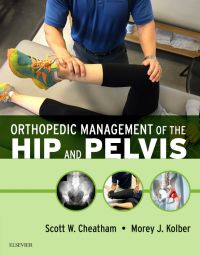
Orthopedic Management of the Hip and Pelvis, 1st Edition
Author :
By Scott W. Cheatham, PT, DPT, PhD(c), OCS, ATC, CSCS and Morey J Kolber, PT, PhD, OCS, Cert. MDT, CSCS*D
Provide effective treatment of hip and pelvic disorders! Orthopedic Management of the Hip and Pelvis offers evidence-based information on the care of non-surgical and surgical patients with common pathologies and injuries. Comprehensive guidelines co
...view more
Provide effective treatment of hip and pelvic disorders! Orthopedic Management of the Hip and Pelvis offers evidence-based information on the care of non-surgical and surgical patients with common pathologies and injuries. Comprehensive guidelines cover a wide range of topics, from anatomy and assessment to strains, tears, and disorders that affect groups such as females, children, dancers, and patients with arthritis. Full-color illustrations and real-life case studies demonstrate how concepts can be applied in clinical practice. Written by physical therapy and orthopedics experts Scott Cheatham and Morey Kolber, this is the first book in the market to focus solely on disorders of the hip and pelvis region.
Provide effective treatment of hip and pelvic disorders! Orthopedic Management of the Hip and Pelvis offers evidence-based information on the care of non-surgical and surgical patients with common pathologies and injuries. Comprehensive guidelines cover a wide range of topics, from anatomy and assessment to strains, tears, and disorders that affect groups such as females, children, dancers, and patients with arthritis. Full-color illustrations and real-life case studies demonstrate how concepts can be applied in clinical practice. Written by physical therapy and orthopedics experts Scott Cheatham and Morey Kolber, this is the first book in the market to focus solely on disorders of the hip and pelvis region.
Key Features
Nearly 300 full-color photos and drawings
provide a detailed, realistic view of the anatomy and pathologies of the hip and pelvic region.
Case studies apply information to real-life patient scenarios.
Anatomy of Lumbopelvic Hip Complex chapter reviews the lumbar spine, pelvis and hip joint with emphasis on the anatomy and biomechanics of each region, providing the background needed to effectively examine and treat common hip and pelvic disorders.
Examination of the Hip and Pelvis chapter presents a systematic examination approach that focuses on the primary pathologies related to the pelvis and hip.
Hip Pathologies chapter discusses common extra-articular hip pathologies, including snapping hip syndrome, meralgia paresthetica, adductor related groin pain, greater trochanteric pain syndrome, and proximal hamstring injuries — facilitating more accurate diagnosis with information on patient profiles, the clinical exam, differential diagnosis, rehabilitation, and possible surgical interventions.
Acetabular Labral Tears and Femoral Acetabular Impingement chapter describes pathomechanical factors, common patient characteristics, and clinical findings relating to non-arthritic hip pain, discussing both conservative and surgical treatment along with considerations for postoperative rehabilitation.
Musculoskeletal Sources of Abdominal and Groin Pain chapter focuses on three of the most common dysfunctions leading to lower abdominal or groin pain — abdominal strains, inguinal hernias, and sports hernias/athletic pubalgia — with guidelines to anatomy, presentation, imaging, and treatment.
Hip Osteoarthrosis chapter helps you manage degenerative hip disorders with an overview of epidemiological risk factors, pathophysiology, differential diagnosis, and intervention options.
The Pediatric and Adolescent Hip chapter focuses on four early disorders of the hip — developmental dysplasia of the hip (DDH), congenital femoral deficiency (CFD), slipped capital femoral epiphysis (SCFE), and Legg-Calvé-Perthes disease (LCPD) — exploring the epidemiology, client profile, assessment, common mechanisms, post-surgical considerations, and rehabilitation considerations.
The Dancer’s Hip chapter addresses the differential diagnosis, evaluation, treatment, and prevention of hip injury in dancers.
The Female Hip and Pelvis chapter helps you diagnose and implement treatment plans for gynecologic pelvic organ prolapse as well as pelvic myofascial dysfunction, and also helps you understand the hormonal, physiological, and anatomical changes that females experience with pregnancy, labor and delivery, and menopause.
The Influence of Lumbosacral Pathology on Hip Pain chapter presents a reductionist approach to the differential diagnosis of hip pain for patients with a pathology of uncertain etiology, offering a primer for signs and symptoms, evidence-based symptom referral patterns and clinical predictors, and case studies.
Traumatic Injuries chapter explores the common types of traumatic injuries of the hip and pelvis, including classification schemes as well as associated causes, complexities, and treatment plans that lead to positive long-term outcomes.
Author Information
By Scott W. Cheatham, PT, DPT, PhD(c), OCS, ATC, CSCS, Assistant Professor
Director Pre-Physical Therapy Program
Division of Kinesiology and Recreation
California State University Dominguez Hills
President/CEO
National Institute of Restorative Exercise, Inc. and Morey J Kolber, PT, PhD, OCS, Cert. MDT, CSCS*D, Associate Professor
Department of Physical Therapy
Nova Southeastern University
3200 S. University Drive
Fort Lauderdale, Florida
Director of Physical Therapy
Boca Raton Orthopaedic Group
By Scott W. Cheatham, PT, DPT, PhD(c), OCS, ATC, CSCS, Assistant Professor
Director Pre-Physical Therapy Program
Division of Kinesiology and Recreation
California State University Dominguez Hills
President/CEO
National Institute of Restorative Exercise, Inc. and Morey J Kolber, PT, PhD, OCS, Cert. MDT, CSCS*D, Associate Professor
Department of Physical Therapy
Nova Southeastern University
3200 S. University Drive
Fort Lauderdale, Florida
Director of Physical Therapy
Boca Raton Orthopaedic Group
1. Anatomy of Lumbopelvic Hip Complex 2. Examination of the Hip and Pelvis 3. Hip Pathologies: Extra-Articular 4. Acetabular Labral Tears and Femoral Acetabular Impingement 5. Musculoskeletal Sources of Abdominal and Groin Pain: Athletic Pubalgia, Hernias and Abdominal Strains 6. Hip Osteoarthrosis 7. The Pediatric and Adolescent Hip 8. The Dancer’s Hip 9. The Female Hip and Pelvis 10. The Influence of Lumbosacral Pathology on Hip Pain: Differential Diagnosis 11. Traumatic injuries
https://www.elsevierhealth.com.au/orthopedic-management-of-the-hip-and-pelvis-9780323294386.html294071Orthopedic Management of the Hip and Pelvishttps://www.elsevierhealth.com.au/media/catalog/product/9/7/9780323294386_6.jpg116.96155.95AUDInStock/Health Professions/Physiotherapy/Books/Health Professions/Physiotherapy/Books/Books/Health Professions/Physiotherapy/Japan Titles43350944388722505456050546645255039525984052631601418269243350924886536505455851451205259838<p>Provide effective treatment of hip and pelvic disorders! <b>Orthopedic Management of the Hip and Pelvis </b>offers evidence-based information on the care of non-surgical and surgical patients with common pathologies and injuries. Comprehensive guidelines cover a wide range of topics, from anatomy and assessment to strains, tears, and disorders that affect groups such as females, children, dancers, and patients with arthritis. Full-color illustrations and real-life case studies demonstrate how concepts can be applied in clinical practice. Written by physical therapy and orthopedics experts Scott Cheatham and Morey Kolber, this is the first book in the market to focus solely on disorders of the hip and pelvis region.</p> <p>Provide effective treatment of hip and pelvic disorders! <b>Orthopedic Management of the Hip and Pelvis </b>offers evidence-based information on the care of non-surgical and surgical patients with common pathologies and injuries. Comprehensive guidelines cover a wide range of topics, from anatomy and assessment to strains, tears, and disorders that affect groups such as females, children, dancers, and patients with arthritis. Full-color illustrations and real-life case studies demonstrate how concepts can be applied in clinical practice. Written by physical therapy and orthopedics experts Scott Cheatham and Morey Kolber, this is the first book in the market to focus solely on disorders of the hip and pelvis region.</p>00add-to-cart97803232943862015ProfessionalBy Scott W. Cheatham, PT, DPT, PhD(c), OCS, ATC, CSCS and Morey J Kolber, PT, PhD, OCS, Cert. MDT, CSCS*D20161Book216w x 276h (8.50" x 10.875")Elsevier42218 Dec 2015Please allow 3-4 weeks for deliveryBy <STRONG>Scott W. Cheatham</STRONG>, PT, DPT, PhD(c), OCS, ATC, CSCS, Assistant Professor
Director Pre-Physical Therapy Program
Division of Kinesiology and Recreation
California State University Dominguez Hills
President/CEO
National Institute of Restorative Exercise, Inc. and <STRONG>Morey J Kolber</STRONG>, PT, PhD, OCS, Cert. MDT, CSCS*D, Associate Professor
Department of Physical Therapy
Nova Southeastern University
3200 S. University Drive
Fort Lauderdale, Florida
Director of Physical Therapy
Boca Raton Orthopaedic GroupBooksBookUnited StatesNoNoNoNoPlease SelectPlease SelectPlease Select