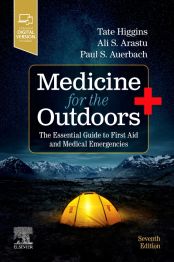
For nearly 40 years, Medicine for the Outdoors: The Essential Guide to First Aid and Medical Emergencies has been the take-along manual of choice for anyone venturing into the mountains, forest, desert, or on water. This essential guide provides highly illustrated, easy-to-follow guidance on immediate stabilization and treatment of persons with virtually any possible medical problem—designed for on-the-spot use when higher-level medical care is not accessible. Written by experts in outdoor medicine, this updated edition helps you manage any situation until medical personnel can take over.
Key Features
-
Covers key information on a wide range of disorders related to specific environments, including natural disasters, high-altitude problems, water-related incidents, heat- and cold-related illnesses, and wildland fires.
-
Provides easy-to-understand recommendations for dealing with animal attacks, venomous wildlife, wild plant and mushroom poisoning, minor and major medical problems, infectious diseases, water disinfection, and severe bleeding.
-
Discusses key topics, including antibiotics, medicines, opioid overdose treatment, wound closure techniques, severe bleeding, spinal assessment and immobilization, tourniquets, the use of a Gamow bag for severe altitude illness, splinting, dental emergencies, disaster preparedness, global conflict guidelines, canine medicine, today’s infectious disease threats, and much more.
-
Includes up-to-date guidelines, even more helpful illustrations and diagrams, and a new chapter: Patient Assessment: A Structured Approach to Emergencies in the Outdoors.
-
Includes advanced topics valuable to physicians and expedition medical staff at all levels of training and experience.
-
Enhanced eBook version included with purchase. Your enhanced eBook allows you to access all of the text, figures, and references from the book on a variety of devices.
Author Information
By Tate Higgins; Ali S. Arastu and Paul S. Auerbach, MD, MS, FACEP, MFAWM, FAAEM, Redlich Family Professor, Department of Emergency Medicine, Stanford University School of Medicine, Stanford, California
PART ONE: General Information
How to Use This Book
Before You Go
General First Aid Principles
Patient Assessment—A Structured Approach to Emergencies in the Outdoors
PART TWO: Major Medical Problems
An Approach to the Unconscious Victim
Chest Injury
Serious Lung Disorders
Chest Pain
Bleeding
Shock
Head Injury
Allergic Reaction
Seizure
Fractures and Dislocations
Amputation
Burns
Inhalation Injuries
Abdominal Pain
Problems of Ovaries and Vagina
Disorders of the Kidneys, Bladder, and Prostate
Problems of the Penis and Testicles
Emergency Childbirth
Diabetes
Stroke
Infectious Diseases
PART THREE: Minor Medical Problems
General Symptoms
Head (Including Eye, Ear, Nose, Throat, and Mouth)
Upper Respiratory Disorders
Disorders of the Gastrointestinal Tract
Skin Disorders
Minor Bruises and Wounds
Musculoskeletal Injuries
Mental Health (Psychiatric) Emergencies
PART FOUR: Disorders Related to Specific Environments
Injuries and Illnesses Due to Cold
Injuries and Illnesses Due to Heat
Wildland Fires
High Altitude–Related Problems
Snakebite
Insect and Arthropod Bites
Lightning Strike, Tornado (Cyclone), Hurricane (Typhoon), Flood,Earthquake, Tidal Wave (Tsunami), Landslide (Mudslide), Volcano, and Snow Avalanche
Hazardous Aquatic Life and Aquatic Infections
Underwater Diving Accidents
Drowning
Animal Attacks
Wild Plant and Mushroom Poisoning
PART FIVE: Miscellaneous Information
Oxygen Administration
Water Disinfection
Motion Sickness
Jet Lag
Personal Safety in an Age of Conflict, Kidnapping, and Terrorism
First Aid Kits
Physicians Abroad
Immunizations
Transport of the Injured Victim
Ground-to-Air Distress Signals
Lost People
Procedures
Dealing With Death
APPENDICES
Appendix One: Commonly Used Drugs (Medications) and Doses
Appendix Two: Conversion Tables
Appendix Three: Guidelines for Prevention of Diseases Transmitted via Human Blood and Other Bodily Fluids
Appendix Four: Commonly Used Applications of the SAM Splint
Appendix Five: Emergency Canine Medicine
GLOSSARY (INCLUDING ACRONYMS AND ABBREVIATIONS)
INDEX
"This book is a brief guide to diagnosing and managing common and uncommon ailments encountered in the wilderness setting. The book is divided into five sections and includes an appendix with more details on medications and procedures." ©Doody’s Review Service, 2023, Faran Ahmad, MBBS(Creighton University Medical Center)