
Skip to Content

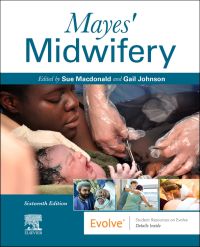
Mayes' Midwifery, 16th Edition

Author :
Edited by Sue Macdonald, MSc PGCEA ADM RM RN FETC FRCM (Hon) and Gail Johnson, MA, DPSM, PGDip Adult Education, RM, RN
Mayes’ Midwifery is a core text for students in the UK, known and loved for its in-depth approach and its close alignment with curricula and practice in this country. The sixteenth edition has been fully updated by leading midwifery educators S ...view more

Mayes’ Midwifery is a core text for students in the UK, known and loved for its in-depth approach and its close alignment with curricula and practice in this country. The sixteenth edition has been fully updated by leading midwifery educators Sue Macdonald and Gail Johnson, and input from several new expert contributors ensures this book remains at the cutting edge.

The text covers all the main aspects of midwifery in detail, including the various stages of pregnancy, possible complexities around childbirth, and psychological and social considerations related to women’s health. It provides the most recent evidence along with detailed anatomy and physiology information, and how these translate into practice.

Packed full of case studies, reflective activities and images, and accompanied by an ancillary website with 600 multiple choice questions and downloadable images, Mayes’ Midwifery makes learning easy for nursing students entering the profession as well as midwives returning to practice and qualified midwives working in different settings in the UK and overseas.
ISBN :
9780323834827
Publication Date :
30-05-2023
Stock Status :
IN STOCK
Earn 8 Points
Earn 7 Points
Add to Cart

Mayes’ Midwifery is a core text for students in the UK, known and loved for its in-depth approach and its close alignment with curricula and practice in this country. The sixteenth edition has been fully updated by leading midwifery educators Sue Macdonald and Gail Johnson, and input from several new expert contributors ensures this book remains at the cutting edge.

The text covers all the main aspects of midwifery in detail, including the various stages of pregnancy, possible complexities around childbirth, and psychological and social considerations related to women’s health. It provides the most recent evidence along with detailed anatomy and physiology information, and how these translate into practice.

Packed full of case studies, reflective activities and images, and accompanied by an ancillary website with 600 multiple choice questions and downloadable images, Mayes’ Midwifery makes learning easy for nursing students entering the profession as well as midwives returning to practice and qualified midwives working in different settings in the UK and overseas.


Key Features
  • Expert contributors include midwifery academics and clinicians, researchers, physiotherapists, neonatal nurse specialists, social scientists and legal experts
  • Learning outcomes and key points to support structured study
  • Reflective activities to apply theory to practice
  • Figures, tables and breakout boxes help navigation and revision
  • Associated online resources with over 600 MCQs, reflective activities, case studies, downloadable image bank to help with essay and assignment preparation
  • Further reading to deepen knowledge and understanding

Author Information
Edited by Sue Macdonald, MSc PGCEA ADM RM RN FETC FRCM (Hon), Midwife Consultant and Educationalist; Formerly Education and Research Manager and Lead Midwife for Education, Royal College of Midwives, London, UK and Gail Johnson, MA, DPSM, PGDip Adult Education, RM, RN, Professional Advisor Education, Royal College of Midwives, London, UK
More Information
ISBN Number 9780323834827
Description Author List Edited by Sue Macdonald, MSc PGCEA ADM RM RN FETC FRCM (Hon), Midwife Consultant and Educationalist; Formerly Education and Research Manager and Lead Midwife for Education, Royal College of Midwives, London, UK and Gail Johnson, MA, DPSM, PGDip Adult Education, RM, RN, Professional Advisor Education, Royal College of Midwives, London, UK
Copyright Year 2024
Edition Number 16
Format Book
Trim 191w x 235h (7.50" x 9.25")
Imprint Elsevier
Page Count 1330
Publication Date 30 May 2023
Stock Status IN STOCK

eBooks : Built for busy schedules & tailored for your goals.

Affordable knowledge, built for you

Get the resources you need-often at a lower cost than print. Quality content designed to support your goals, without stretching your budget.

Seamless access wherever you are

Open your eBook on your laptop, tablet, or phone - online or offline. Learning fits into your life, no matter where you go.

Always in sync

Start reading on one device and pick up right where you left off on another. Your progress and notes stay with you, every step of the way.

Tools the make learning stick

Highlight key points, take notes, create flashcards, or listen to your eBook read aloud. Interactive features help you deepen your knowledge, your way.


Your eBook is ready whenever you are!

1.  Check your email for your access code.

2.  Sign into or create your VitalSource account and redeem your code.

3.  Open your eBook - ready whenever you are!

FAQ

The access code for your new eBook will be sent in your order confirmation email. Your code can also be accessed in your My Account section on the Elsevier webshop. If you do not receive your code within a few minutes, please check your spam folder.


Step-by-step guidance on how to download Bookshelf and also redeem your code can be found here.


The access code for your new eBook does not expire. However, we always suggest redeeming immediately after purchase to start experiencing the benefits of and insights from your purchase. Important to note - the code provided is a single use code and only valid for the edition you purchase. It does not provide access to past nor future editions of the title.


You will have unlimited access to your eBook on the device to which it was downloaded.


Discover the various learning features that our eBooks offer on the Bookshelf® Reader! For example, you can highlight different text passages, create notes and flashcards, have the text read to you, etc. Particularly practical: You can also use your eBooks offline. More information on the learning functions can be found on the Vitalsource page.


Quality is our top priority. That's why we collaborate with the leading eBook reader provider VitalSource. VitalSource has its own eBook reader Bookshelf®, which you can easily download. This reader is very user-friendly and offers more features than other standard readers. For example, you can highlight different text passages, create notes and flashcards, have the text read to you, etc. Particularly practical: You can also use your eBooks offline. More information can be found on the Vitalsource page.


Elsevier offers its eBooks in ePub format, as we believe this format is best suited to display our content ideally on as many devices as possible.


You can return your eBook within 13 days of purchase. eBooks that have been partially printed or flipped through more than 15% are excluded from returns.

Any questions ?

Support Center >

Top Picks from Our Community

Part 1: The midwife in context
1. Global midwifery - an international perspective
2. An introduction to midwifery history in the United Kingdom
3. The regulation of midwives
4. Clinical governance and the midwife
5. Learning, being, and developing as a midwife
6. Being a student midwife
7. Evidence-based practice and research for practice
8. Leadership and management in midwifery
9. An introduction to ethics for midwifery practice
10. Law and the midwife
11. Pharmacology and the midwife

Part 2: Childbirth in context
12. Sociocultural and spiritual context of childbearing
13. Psychological context of childbirth
14. Sex, gender, sexuality, and childbearing
15. National Health Service policy and midwifery
16. Maternity service provision
17. Legal frameworks for the care of the child

Part 3: Public health, health promotion in the context of childbirth
18. Epidemiology
19. Infection prevention and control in maternity care
20. Nutrition for a healthy pregnancy
21. Complementary therapies and natural remedies in pregnancy and birth
22. Public health, health promotion, and education
23. Preconception care
24. Education for parenthood
25. Physical preparation for childbirth and beyond
26. Vulnerable women and families

Part 4 The anatomy and physiology of fertility, conception and pregnancy
27. Anatomy of male and female reproduction
28. Female reproductive physiology - cyclical changes in the ovaries, uterus, and mammary gland, across the infertile cycle
29. Genetics and genomics
30. Fertility and its control
31. Infertility and assisted conception
32. From fertilisation to feto-placental development
33. The fetal skull

Part 5 Pregnancy
34. Maternal cardiovascular, respiratory, haemodynamic, uterine, and gastrointestinal-mammary adaptations to the fertile cycle
35. Antenatal care
36. Antenatal investigations
37. The choice and personalisation agenda

Part 6 Labour and birth
38. Neuroendocrinology of parenting: from nocturnal uterine activation to suckling-lactation and emotional connectivity between parents and infant
39. Care in the first stage of labour
40. Care in the second stage of labour
41. Supporting choices in reducing pain and fear during labour
42. Care in the third stage of labour
43. The pelvic floor

Part 7 Postnatal care and the care of the newborn baby
44. Women and family-centred postnatal care
45. Physiology, assessment, and care of the newborn
46. Thermoregulation
47. Infant feeding and relationship building

Part 8 Women and babies with complex needs
48. The preterm baby and the small baby
49. Respiratory and cardiac disorders in the neonate
50. Neonatal jaundice
51. Neonatal infection
52. Congenital anomalies and metabolic and endocrine disorders
53. Pregnancy loss and baby deaths
54. Nausea and vomiting
55. Bleeding in pregnancy
56. Hypertensive and medical disorders in pregnancy
57. Sexually transmitted infections
58. Abnormalities and anomalies of the genital tract
59. Multiple pregnancy and birth
60. Preterm labour and birth
61. Induction of labour and post-term pregnancy
62. Presentation and prolapse of the umbilical cord
63. Rhythmic variations of labour
64. Malpositions and malpresentations
65. Obstructed labour and uterine rupture
66. Obstetric interventions
67. Shoulder dystocia
68. Complications related to the third stage of labour
69. Maternal morbidity following childbirth
70. Mental health and well being in pregnancy and childbirth
71. Pregnancy loss and the death of a baby
72. Midwifery - practising in a complex world
Write Your Own Review
Only registered users can write reviews. Please sign in or create an account