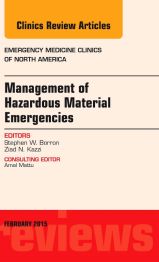
Management of Hazardous Material Emergencies, An Issue of Emergency Medicine Clinics of North America, 1st Edition
Author :
By Stephen W. Borron, MD, MS, FACEP, FACMT
This issue of Emergency Medicine Clinics, edited by Drs. Stephen Borron and Ziad Kazzi focuses on emergencies arising from contact with Hazardous Materials. Article topics include: Selected classes and examples of dangerous industrial chemicals, weap
...view more
This issue of Emergency Medicine Clinics, edited by Drs. Stephen Borron and Ziad Kazzi focuses on emergencies arising from contact with Hazardous Materials. Article topics include: Selected classes and examples of dangerous industrial chemicals, weapons of mass destruction, and their syndromic identification; Hospital preparedness for chemical and radiological disasters; Personnel protection and decontamination of adults and children; Resources for toxicological information and assistance; Asphyxiants; Corrosives and irritants; Organophosphates and carbamates; Intentional and unintentional food, drug, and water contamination, and more!
This issue of Emergency Medicine Clinics, edited by Drs. Stephen Borron and Ziad Kazzi focuses on emergencies arising from contact with Hazardous Materials. Article topics include: Selected classes and examples of dangerous industrial chemicals, weapons of mass destruction, and their syndromic identification; Hospital preparedness for chemical and radiological disasters; Personnel protection and decontamination of adults and children; Resources for toxicological information and assistance; Asphyxiants; Corrosives and irritants; Organophosphates and carbamates; Intentional and unintentional food, drug, and water contamination, and more!
Author Information
By Stephen W. Borron, MD, MS, FACEP, FACMT, Clinical Professor of Emergency Medicine (Surgery), University of Texas Health Science Center at San Antonio; Consultant in Toxicology, South Texas Poison Center, San Antonio, TX and Associate Clinical Professor of Emergency Medicine, Medicine, and Occupational and Environmental Health, The George Washington University, Washington, DC
By Stephen W. Borron, MD, MS, FACEP, FACMT, Clinical Professor of Emergency Medicine (Surgery), University of Texas Health Science Center at San Antonio; Consultant in Toxicology, South Texas Poison Center, San Antonio, TX and Associate Clinical Professor of Emergency Medicine, Medicine, and Occupational and Environmental Health, The George Washington University, Washington, DC
https://www.elsevierhealth.com.au/management-of-hazardous-material-emergencies-an-issue-of-emergency-medicine-clinics-of-north-america-9780323354370.html294273Management of Hazardous Material Emergencies, An Issue of Emergency Medicine Clinics of North Americahttps://www.elsevierhealth.com.au/media/catalog/product/9/7/9780323354370_7.jpg126.71168.95AUDInStock/Nursing & Midwifery/Specialist Nursing/Clinics/Medicine & Surgery/Emergency Medicine/Medicine/Emergency Medicine/Nursing & Midwifery/Specialist Nursing/Clinics/Clinics/Medicine/Emergency Medicine/Nursing & Midwifery/Specialist Nursing/Japan Titles43351064388725433513550545705054572505466652550415259851525985352631601418269243351054335088488653650545535054571514512052598335259852This issue of Emergency Medicine Clinics, edited by Drs. Stephen Borron and Ziad Kazzi focuses on emergencies arising from contact with Hazardous Materials. Article topics include: Selected classes and examples of dangerous industrial chemicals, weapons of mass destruction, and their syndromic identification; Hospital preparedness for chemical and radiological disasters; Personnel protection and decontamination of adults and children; Resources for toxicological information and assistance; Asphyxiants; Corrosives and irritants; Organophosphates and carbamates; Intentional and unintentional food, drug, and water contamination, and more! This issue of Emergency Medicine Clinics, edited by Drs. Stephen Borron and Ziad Kazzi focuses on emergencies arising from contact with Hazardous Materials. Article topics include: Selected classes and examples of dangerous industrial chemicals, weapons of mass destruction, and their syndromic identification; Hospital preparedness for chemical and radiological disasters; Personnel protection and decontamination of adults and children; Resources for toxicological information and assistance; Asphyxiants; Corrosives and irritants; Organophosphates and carbamates; Intentional and unintentional food, drug, and water contamination, and more!00add-to-cart97803233543702014ProfessionalBy Stephen W. Borron, MD, MS, FACEP, FACMT20151Book152w x 229h (6.00" x 9.00")Elsevier08 Dec 2014Please allow 10-14 working days for deliveryBy <STRONG>Stephen W. Borron</STRONG>, MD, MS, FACEP, FACMT, Clinical Professor of Emergency Medicine (Surgery), University of Texas Health Science Center at San Antonio; Consultant in Toxicology, South Texas Poison Center, San Antonio, TX and Associate Clinical Professor of Emergency Medicine, Medicine, and Occupational and Environmental Health, The George Washington University, Washington, DCClinicsClinicsThe Clinics: Internal MedicineUnited StatesNoNoNoNoPlease SelectPlease SelectPlease Select