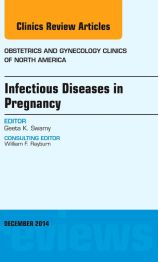
Infectious Diseases in Pregnancy, An Issue of Obstetrics and Gynecology Clinics, 1st Edition
Author :
By Geeta K. Swamy, MD
This issue of Obstetrics and Gynecology Clinics of North America provides a summary of several more common maternal-fetal-infant infectious diseases. Several experts in the field of maternal and perinatal infection have contributed to this issue to p
...view more
This issue of Obstetrics and Gynecology Clinics of North America provides a summary of several more common maternal-fetal-infant infectious diseases. Several experts in the field of maternal and perinatal infection have contributed to this issue to provide an overview of the up-to-date preventive strategies, screening and diagnostic methods, and treatment guidelines. While guidelines such as universal vaccination to prevent influenza during pregnancy are fairly well justified by supporting data, there is much uncertainty about the appropriate screening guidelines for conditions such as cytomegalovirus, where the lack of a proven effective treatment diminishes the value of screening. Moreover, increasing issues of antibiotic resistance and the lack of significant advancement in developing newer effective agents imply that both providers and health care facilities must follow guidelines of antimicrobial stewardship (ie, coordinated efforts to improve and measure the appropriate use of antimicrobials). It is our hope that this issue will aid providers in navigating these complex issues while also understanding the current state-of-the-science
This issue of Obstetrics and Gynecology Clinics of North America provides a summary of several more common maternal-fetal-infant infectious diseases. Several experts in the field of maternal and perinatal infection have contributed to this issue to provide an overview of the up-to-date preventive strategies, screening and diagnostic methods, and treatment guidelines. While guidelines such as universal vaccination to prevent influenza during pregnancy are fairly well justified by supporting data, there is much uncertainty about the appropriate screening guidelines for conditions such as cytomegalovirus, where the lack of a proven effective treatment diminishes the value of screening. Moreover, increasing issues of antibiotic resistance and the lack of significant advancement in developing newer effective agents imply that both providers and health care facilities must follow guidelines of antimicrobial stewardship (ie, coordinated efforts to improve and measure the appropriate use of antimicrobials). It is our hope that this issue will aid providers in navigating these complex issues while also understanding the current state-of-the-science
https://www.elsevierhealth.com.au/infectious-diseases-in-pregnancy-an-issue-of-obstetrics-and-gynecology-clinics-9780323326643.html294225Infectious Diseases in Pregnancy, An Issue of Obstetrics and Gynecology Clinicshttps://www.elsevierhealth.com.au/media/catalog/product/9/7/9780323326643_7.jpg128.96171.95AUDInStock/Clinics/Medicine & Surgery/Obstetrics & Gynecology/Medicine/Obstetrics & Gynecology/Clinics/Clinics/Medicine/Obstetrics & Gynecology/Japan Titles43887254335157505460850546665255041525989552631601418269243350884886536505455351451205259833This issue of Obstetrics and Gynecology Clinics of North America provides a summary of several more common maternal-fetal-infant infectious diseases. Several experts in the field of maternal and perinatal infection have contributed to this issue to provide an overview of the up-to-date preventive strategies, screening and diagnostic methods, and treatment guidelines. While guidelines such as universal vaccination to prevent influenza during pregnancy are fairly well justified by supporting data, there is much uncertainty about the appropriate screening guidelines for conditions such as cytomegalovirus, where the lack of a proven effective treatment diminishes the value of screening. Moreover, increasing issues of antibiotic resistance and the lack of significant advancement in developing newer effective agents imply that both providers and health care facilities must follow guidelines of antimicrobial stewardship (ie, coordinated efforts to improve and measure the appropriate use of antimicrobials). It is our hope that this issue will aid providers in navigating these complex issues while also understanding the current state-of-the-science This issue of Obstetrics and Gynecology Clinics of North America provides a summary of several more common maternal-fetal-infant infectious diseases. Several experts in the field of maternal and perinatal infection have contributed to this issue to provide an overview of the up-to-date preventive strategies, screening and diagnostic methods, and treatment guidelines. While guidelines such as universal vaccination to prevent influenza during pregnancy are fairly well justified by supporting data, there is much uncertainty about the appropriate screening guidelines for conditions such as cytomegalovirus, where the lack of a proven effective treatment diminishes the value of screening. Moreover, increasing issues of antibiotic resistance and the lack of significant advancement in developing newer effective agents imply that both providers and health care facilities must follow guidelines of antimicrobial stewardship (ie, coordinated efforts to improve and measure the appropriate use of antimicrobials). It is our hope that this issue will aid providers in navigating these complex issues while also understanding the current state-of-the-science00add-to-cart97803233266432014ProfessionalBy Geeta K. Swamy, MD20141Book152w x 229h (6.00" x 9.00")Elsevier05 Dec 2014Please allow 10-14 working days for deliveryBy <STRONG>Geeta K. Swamy</STRONG>, MD, Duke University
Durham, NCClinicsClinicsThe Clinics: Internal MedicineUnited StatesNoNoNoNoPlease SelectPlease SelectPlease Select