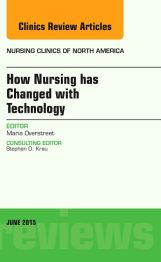
How Nursing has Changed with Technology, An Issue of Nursing Clinics, 1st Edition
Author :
By Maria Overstreet, PhD, RN
How has technology changed the art and science of nursing practice?Many facets of nursing practice have stayed constant over the years such as the way we advocate for our patients and the art of caring for our patients. However, nursing practice has
...view more
How has technology changed the art and science of nursing practice?Many facets of nursing practice have stayed constant over the years such as the way we advocate for our patients and the art of caring for our patients. However, nursing practice has evolved over the years especially in the bedside delivery of state of the art nursing care. Technology at the bedside has forced nurse educators to change the ways in which we always have taught nursing students. Technology has also begun to change the methods used in the actual bedside nursing care. In this issue, you will hear from some of the nursing experts in areas of nursing care that has changed in either the delivery of care or method of assessing care of the patient. Nursing experts will describe some of the historical changes and intrigue you in the changes expected to come to the bedside. Why is this issue important? First, we gain insight from a review of where we have been and nurses tend to reminisce on our past as well as romance our historical roots. Second, technology is ever changing and it is good practice to keep abreast of what is happening in other areas of nursing so that we can apply others successes in our own specific areas of nursing. Third, informatics in nursing is a growing field and nursing must embrace technology and learn to adapt various methods of delivery so that we can appropriately care for and advocate for our patients.With the changes in our national healthcare system, we must encourage nurses to try out new methods of delivery as well as encourage their ideas of how nursing can change. The articles in this issue reflect these changes.
How has technology changed the art and science of nursing practice?Many facets of nursing practice have stayed constant over the years such as the way we advocate for our patients and the art of caring for our patients. However, nursing practice has evolved over the years especially in the bedside delivery of state of the art nursing care. Technology at the bedside has forced nurse educators to change the ways in which we always have taught nursing students. Technology has also begun to change the methods used in the actual bedside nursing care. In this issue, you will hear from some of the nursing experts in areas of nursing care that has changed in either the delivery of care or method of assessing care of the patient. Nursing experts will describe some of the historical changes and intrigue you in the changes expected to come to the bedside. Why is this issue important? First, we gain insight from a review of where we have been and nurses tend to reminisce on our past as well as romance our historical roots. Second, technology is ever changing and it is good practice to keep abreast of what is happening in other areas of nursing so that we can apply others successes in our own specific areas of nursing. Third, informatics in nursing is a growing field and nursing must embrace technology and learn to adapt various methods of delivery so that we can appropriately care for and advocate for our patients.With the changes in our national healthcare system, we must encourage nurses to try out new methods of delivery as well as encourage their ideas of how nursing can change. The articles in this issue reflect these changes.
Author Information
By Maria Overstreet, PhD, RN, Vanderbilt University School of Nursing, Nashville, TN
https://www.elsevierhealth.com.au/how-nursing-has-changed-with-technology-an-issue-of-nursing-clinics-9780323388962.html294440How Nursing has Changed with Technology, An Issue of Nursing Clinicshttps://www.elsevierhealth.com.au/media/catalog/product/9/7/9780323388962_7.jpg126.71168.95AUDInStock/Clinics/Nursing & Midwifery/General Nursing/Nursing & Midwifery/General Nursing/Clinics/Clinics/Nursing & Midwifery/General Nursing/Japan Titles43887254335116505457550546665255041525985652631601418269243351054886536505457151451205259852How has technology changed the art and science of nursing practice?Many facets of nursing practice have stayed constant over the years such as the way we advocate for our patients and the art of caring for our patients. However, nursing practice has evolved over the years especially in the bedside delivery of state of the art nursing care. Technology at the bedside has forced nurse educators to change the ways in which we always have taught nursing students. Technology has also begun to change the methods used in the actual bedside nursing care. In this issue, you will hear from some of the nursing experts in areas of nursing care that has changed in either the delivery of care or method of assessing care of the patient. Nursing experts will describe some of the historical changes and intrigue you in the changes expected to come to the bedside. Why is this issue important? First, we gain insight from a review of where we have been and nurses tend to reminisce on our past as well as romance our historical roots. Second, technology is ever changing and it is good practice to keep abreast of what is happening in other areas of nursing so that we can apply others successes in our own specific areas of nursing. Third, informatics in nursing is a growing field and nursing must embrace technology and learn to adapt various methods of delivery so that we can appropriately care for and advocate for our patients.With the changes in our national healthcare system, we must encourage nurses to try out new methods of delivery as well as encourage their ideas of how nursing can change. The articles in this issue reflect these changes. How has technology changed the art and science of nursing practice?Many facets of nursing practice have stayed constant over the years such as the way we advocate for our patients and the art of caring for our patients. However, nursing practice has evolved over the years especially in the bedside delivery of state of the art nursing care. Technology at the bedside has forced nurse educators to change the ways in which we always have taught nursing students. Technology has also begun to change the methods used in the actual bedside nursing care. In this issue, you will hear from some of the nursing experts in areas of nursing care that has changed in either the delivery of care or method of assessing care of the patient. Nursing experts will describe some of the historical changes and intrigue you in the changes expected to come to the bedside. Why is this issue important? First, we gain insight from a review of where we have been and nurses tend to reminisce on our past as well as romance our historical roots. Second, technology is ever changing and it is good practice to keep abreast of what is happening in other areas of nursing so that we can apply others successes in our own specific areas of nursing. Third, informatics in nursing is a growing field and nursing must embrace technology and learn to adapt various methods of delivery so that we can appropriately care for and advocate for our patients.With the changes in our national healthcare system, we must encourage nurses to try out new methods of delivery as well as encourage their ideas of how nursing can change. The articles in this issue reflect these changes.00add-to-cart97803233889622015ProfessionalBy Maria Overstreet, PhD, RN20151BookOtherElsevier02 Jun 2015Please allow 10-14 working days for deliveryBy <STRONG>Maria Overstreet</STRONG>, PhD, RN, Vanderbilt University School of Nursing, Nashville, TNClinicsClinicsThe Clinics: NursingUnited StatesNoNoNoNoPlease SelectPlease SelectPlease Select