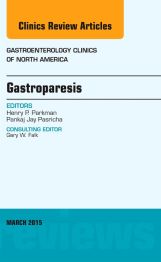
Gastroparesis, An issue of Gastroenterology Clinics of North America, 1st Edition
Author :
By Henry P. Parkman, MD
This issue will be an informative treatise on gastroparesis, a symptomatic chronic disorder of the stomach characterized by delayed gastric emptying in the absence of mechanical obstruction. Gastroparesis is an increasingly recognized and diagnosed
...view more
This issue will be an informative treatise on gastroparesis, a symptomatic chronic disorder of the stomach characterized by delayed gastric emptying in the absence of mechanical obstruction. Gastroparesis is an increasingly recognized and diagnosed disorder. Treatment can be challenging due to several mechanisms which play a role in causing the symptoms. Symptoms of gastroparesis are variable and include early satiety, nausea, vomiting, bloating, and upper abdominal discomfort. These symptoms can range from mild to severe leading to such complications as malnutrition, functional disability, and multiple hospitalizations. The three most common etiologies are diabetes, post-surgical, and idiopathic (unknown). Treatment consists of dietary manipulation, medical, and surgical therapy. The articles will provide a comprehensive review and in-depth information on gastroparesis. Each chapter will be written by an expert in the area. This issue will give the reader a better appreciation for the breadth of gastroparesis.
This issue will be an informative treatise on gastroparesis, a symptomatic chronic disorder of the stomach characterized by delayed gastric emptying in the absence of mechanical obstruction. Gastroparesis is an increasingly recognized and diagnosed disorder. Treatment can be challenging due to several mechanisms which play a role in causing the symptoms. Symptoms of gastroparesis are variable and include early satiety, nausea, vomiting, bloating, and upper abdominal discomfort. These symptoms can range from mild to severe leading to such complications as malnutrition, functional disability, and multiple hospitalizations. The three most common etiologies are diabetes, post-surgical, and idiopathic (unknown). Treatment consists of dietary manipulation, medical, and surgical therapy. The articles will provide a comprehensive review and in-depth information on gastroparesis. Each chapter will be written by an expert in the area. This issue will give the reader a better appreciation for the breadth of gastroparesis.
Author Information
By Henry P. Parkman, MD, Temple University, Philadelphia, PA
https://www.elsevierhealth.com.au/gastroparesis-an-issue-of-gastroenterology-clinics-of-north-america-9780323356565.html294320Gastroparesis, An issue of Gastroenterology Clinics of North Americahttps://www.elsevierhealth.com.au/media/catalog/product/9/7/9780323356565_7.jpg126.71168.95AUDInStock/Medicine & Surgery/Gastroenterology & Hepatology/Clinics/Medicine/Gastroenterology & Hepatology/Clinics/Clinics/Medicine/Gastroenterology & Hepatology/Japan Titles43351394388725505460750546665255041525989452631601418269243350884886536505455351451205259833This issue will be an informative treatise on gastroparesis, a symptomatic chronic disorder of the stomach characterized by delayed gastric emptying in the absence of mechanical obstruction. Gastroparesis is an increasingly recognized and diagnosed disorder. Treatment can be challenging due to several mechanisms which play a role in causing the symptoms. Symptoms of gastroparesis are variable and include early satiety, nausea, vomiting, bloating, and upper abdominal discomfort. These symptoms can range from mild to severe leading to such complications as malnutrition, functional disability, and multiple hospitalizations. The three most common etiologies are diabetes, post-surgical, and idiopathic (unknown). Treatment consists of dietary manipulation, medical, and surgical therapy. The articles will provide a comprehensive review and in-depth information on gastroparesis. Each chapter will be written by an expert in the area. This issue will give the reader a better appreciation for the breadth of gastroparesis. This issue will be an informative treatise on gastroparesis, a symptomatic chronic disorder of the stomach characterized by delayed gastric emptying in the absence of mechanical obstruction. Gastroparesis is an increasingly recognized and diagnosed disorder. Treatment can be challenging due to several mechanisms which play a role in causing the symptoms. Symptoms of gastroparesis are variable and include early satiety, nausea, vomiting, bloating, and upper abdominal discomfort. These symptoms can range from mild to severe leading to such complications as malnutrition, functional disability, and multiple hospitalizations. The three most common etiologies are diabetes, post-surgical, and idiopathic (unknown). Treatment consists of dietary manipulation, medical, and surgical therapy. The articles will provide a comprehensive review and in-depth information on gastroparesis. Each chapter will be written by an expert in the area. This issue will give the reader a better appreciation for the breadth of gastroparesis.00add-to-cart97803233565652015ProfessionalBy Henry P. Parkman, MD20151Book152w x 229h (6.00" x 9.00")Elsevier014 Apr 2015Please allow 10-14 working days for deliveryBy <STRONG>Henry P. Parkman</STRONG>, MD, Temple University, Philadelphia, PAClinicsClinicsThe Clinics: Internal MedicineUnited StatesNoNoNoNoPlease SelectPlease SelectPlease Select