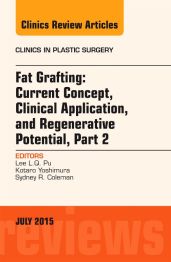
Fat Grafting: Current Concept, Clinical Application, and Regenerative Potential, PART 2, An Issue of Clinics in Plastic Surgery, 1st Edition
Author :
By Lee L.Q. Pu, MD, PhD
This issue of Clinics in Plastic Surgery offers the plastic surgeon (and facial plastic surgeon, reconstructive surgeon, burn surgeon, any surgeon working with face or body reconstruction or rejuvenation) an intensive review of all aspects of working
...view more
This issue of Clinics in Plastic Surgery offers the plastic surgeon (and facial plastic surgeon, reconstructive surgeon, burn surgeon, any surgeon working with face or body reconstruction or rejuvenation) an intensive review of all aspects of working with fat. The title succinctly sums it up that clinical applications, currently known concepts, and future expectations of working with fat for reconstructive or cosmetic surgery are presented here. The Editors and their selected are peerless in the field that focuses on biology of fat, adipose derived stem cells, and growth factors; harvesting, processing, and storage of harvested fat; how to maximize the results of fat grafting; and safety issues with fat grafting and growth factors. Practical clinical applications, currently known concepts, and future expectations of working with fat for reconstructive or cosmetic surgery are presented here. Because of the depth and comprehensiveness of the material presented by the experts in this field, this issues is presented in two parts; Part 2 topics include: Fat grafting for facial filling and regeneration; Fat grafting for treatment of craniofacial deformity; Role of fat grafting in breast reconstruction; Combined use of implant and fat grafting for breast augmentation; Breast reconstruction with fat grafting and Brava; Safety considerations of fat grafting to the breast. There is an entire section on Regenerative Approaches with Fat Grafting - Ulcers and scars; Dupytren's contracture, Scleroderma; abd Velopharyngeal insufficiency. Future use of fat graft is discussed, along with management of catastrophic complications following fat grafting.
This issue of Clinics in Plastic Surgery offers the plastic surgeon (and facial plastic surgeon, reconstructive surgeon, burn surgeon, any surgeon working with face or body reconstruction or rejuvenation) an intensive review of all aspects of working with fat. The title succinctly sums it up that clinical applications, currently known concepts, and future expectations of working with fat for reconstructive or cosmetic surgery are presented here. The Editors and their selected are peerless in the field that focuses on biology of fat, adipose derived stem cells, and growth factors; harvesting, processing, and storage of harvested fat; how to maximize the results of fat grafting; and safety issues with fat grafting and growth factors. Practical clinical applications, currently known concepts, and future expectations of working with fat for reconstructive or cosmetic surgery are presented here. Because of the depth and comprehensiveness of the material presented by the experts in this field, this issues is presented in two parts; Part 2 topics include: Fat grafting for facial filling and regeneration; Fat grafting for treatment of craniofacial deformity; Role of fat grafting in breast reconstruction; Combined use of implant and fat grafting for breast augmentation; Breast reconstruction with fat grafting and Brava; Safety considerations of fat grafting to the breast. There is an entire section on Regenerative Approaches with Fat Grafting - Ulcers and scars; Dupytren's contracture, Scleroderma; abd Velopharyngeal insufficiency. Future use of fat graft is discussed, along with management of catastrophic complications following fat grafting.
Author Information
By Lee L.Q. Pu, MD, PhD, University of California, Davis
https://www.elsevierhealth.com.au/fat-grafting-current-concept-clinical-application-and-regenerative-potential-part-2-an-issue-of-clinics-in-plastic-surgery-9780323392709.html294483Fat Grafting: Current Concept, Clinical Application, and Regenerative Potential, PART 2, An Issue of Clinics in Plastic Surgeryhttps://www.elsevierhealth.com.au/media/catalog/product/9/7/9780323392709_7.jpg126.71168.95AUDInStock/Medicine & Surgery/Plastic & Reconstructive Surgery /Clinics/Medicine/Plastic & Reconstructive Surgery /Clinics/Clinics/Medicine/Plastic & Reconstructive Surgery/Japan Titles43351034388725505459450546665255041525987852631601418269243350884886536505455351451205259833This issue of Clinics in Plastic Surgery offers the plastic surgeon (and facial plastic surgeon, reconstructive surgeon, burn surgeon, any surgeon working with face or body reconstruction or rejuvenation) an intensive review of all aspects of working with fat. The title succinctly sums it up that clinical applications, currently known concepts, and future expectations of working with fat for reconstructive or cosmetic surgery are presented here. The Editors and their selected are peerless in the field that focuses on biology of fat, adipose derived stem cells, and growth factors; harvesting, processing, and storage of harvested fat; how to maximize the results of fat grafting; and safety issues with fat grafting and growth factors. Practical clinical applications, currently known concepts, and future expectations of working with fat for reconstructive or cosmetic surgery are presented here. Because of the depth and comprehensiveness of the material presented by the experts in this field, this issues is presented in two parts; Part 2 topics include: Fat grafting for facial filling and regeneration; Fat grafting for treatment of craniofacial deformity; Role of fat grafting in breast reconstruction; Combined use of implant and fat grafting for breast augmentation; Breast reconstruction with fat grafting and Brava; Safety considerations of fat grafting to the breast. There is an entire section on Regenerative Approaches with Fat Grafting - Ulcers and scars; Dupytren's contracture, Scleroderma; abd Velopharyngeal insufficiency. Future use of fat graft is discussed, along with management of catastrophic complications following fat grafting. This issue of Clinics in Plastic Surgery offers the plastic surgeon (and facial plastic surgeon, reconstructive surgeon, burn surgeon, any surgeon working with face or body reconstruction or rejuvenation) an intensive review of all aspects of working with fat. The title succinctly sums it up that clinical applications, currently known concepts, and future expectations of working with fat for reconstructive or cosmetic surgery are presented here. The Editors and their selected are peerless in the field that focuses on biology of fat, adipose derived stem cells, and growth factors; harvesting, processing, and storage of harvested fat; how to maximize the results of fat grafting; and safety issues with fat grafting and growth factors. Practical clinical applications, currently known concepts, and future expectations of working with fat for reconstructive or cosmetic surgery are presented here. Because of the depth and comprehensiveness of the material presented by the experts in this field, this issues is presented in two parts; Part 2 topics include: Fat grafting for facial filling and regeneration; Fat grafting for treatment of craniofacial deformity; Role of fat grafting in breast reconstruction; Combined use of implant and fat grafting for breast augmentation; Breast reconstruction with fat grafting and Brava; Safety considerations of fat grafting to the breast. There is an entire section on Regenerative Approaches with Fat Grafting - Ulcers and scars; Dupytren's contracture, Scleroderma; abd Velopharyngeal insufficiency. Future use of fat graft is discussed, along with management of catastrophic complications following fat grafting.00add-to-cart97803233927092015ProfessionalBy Lee L.Q. Pu, MD, PhD20151Book178w x 254h (7.00" x 10.00")Elsevier07 Jul 2015Please allow 10-14 working days for deliveryBy <STRONG>Lee L.Q. Pu</STRONG>, MD, PhD, University of California, DavisClinicsClinicsThe Clinics: SurgeryUnited StatesNoNoNoNoPlease SelectPlease SelectPlease Select