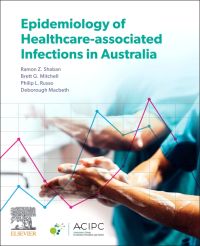
Epidemiology of Healthcare-Associated Infections in Australia, 1st Edition
Author :
By Ramon Z. Shaban, BSc(Med), BN, GradCertInfCon, PGDipPH&TM, MEd, MCommHealthPrac(Hons1), PhD, RN, FCENA, FACN, FACIPC, CICP-E, Brett G. Mitchell, BN, DipTropN, CertHealthM, GradCertTeachSuper, MAdvPrac, PhD, RN, CICP-E, FACN, FACIPC, Philip Russo, BN, MClinEpid, PhD, RN, CICP-E, MACN, FACICPC and Deborough Macbeth, BN, MAAppEthics, PhD, RN, CICP-E, PSM
Endorsed by the Australasian College for Infection Prevention and Control (ACIPC)
ACIPC is the peak body for infection prevention and control professionals in the Australasian region.
Healthcare-associated Infections (HAIs) are a major threat t
...view more
Endorsed by the Australasian College for Infection Prevention and Control (ACIPC)
ACIPC is the peak body for infection prevention and control professionals in the Australasian region.
Healthcare-associated Infections (HAIs) are a major threat to patient safety and the quality of healthcare globally. Despite this, Australia does not have a nationally coordinated program for the surveillance and reporting of HAIs. Epidemiology of Healthcare-associated Infections in Australia is Australia’s first peer-reviewed, evidence-based assessment of the epidemiology of HAIs using publicly available data from hospital-acquired complications (HACs), state-based surveillance systems and peer-reviewed and grey literature sources.
This important work has been compiled by some of Australia’s leading infection control professionals and researchers. It will build national consensus on definitions, surveillance methodology and reporting of the incidence of HAIs. In doing so, it provides hospitals and those working in infection prevention and control an opportunity to benchmark and evaluate interventions to reduce infections and ensure transparency on reporting methods that will strengthen Australia’s efforts to prevent and control HAIs.
Here is a great article published in Sydney Morning Herald on the publication of Epidemiology of Healthcare-associated infections in Australia.
Endorsed by the Australasian College for Infection Prevention and Control (ACIPC)
ACIPC is the peak body for infection prevention and control professionals in the Australasian region.
Healthcare-associated Infections (HAIs) are a major threat to patient safety and the quality of healthcare globally. Despite this, Australia does not have a nationally coordinated program for the surveillance and reporting of HAIs. Epidemiology of Healthcare-associated Infections in Australia is Australia’s first peer-reviewed, evidence-based assessment of the epidemiology of HAIs using publicly available data from hospital-acquired complications (HACs), state-based surveillance systems and peer-reviewed and grey literature sources.
This important work has been compiled by some of Australia’s leading infection control professionals and researchers. It will build national consensus on definitions, surveillance methodology and reporting of the incidence of HAIs. In doing so, it provides hospitals and those working in infection prevention and control an opportunity to benchmark and evaluate interventions to reduce infections and ensure transparency on reporting methods that will strengthen Australia’s efforts to prevent and control HAIs.
Here is a great article published in Sydney Morning Herald on the publication of Epidemiology of Healthcare-associated infections in Australia.
Key Features
Collated publicly available HAI surveillance definitions from jurisdictions across Australia
Collated publicly available national HACs HAI data derived from the associated surveillance programs
Identification of the gaps in both publicly available HAI data from different sources and the lack of publicly available HAI surveillance data in one serialised title
Supporting video summarising key content
Available in eBook format with print-on-demand option
Author Information
By Ramon Z. Shaban, BSc(Med), BN, GradCertInfCon, PGDipPH&TM, MEd, MCommHealthPrac(Hons1), PhD, RN, FCENA, FACN, FACIPC, CICP-E, Clinical Chair of Communicable Diseases Control and Infection Prevention, Sydney Infectious Diseases Institute and Susan Wakil School of Nursing and Midwifery, Faculty of Medicine and Health, University of Sydney, Camperdown, New South Wales, Australia; Brett G. Mitchell, BN, DipTropN, CertHealthM, GradCertTeachSuper, MAdvPrac, PhD, RN, CICP-E, FACN, FACIPC, Professor of Nursing and Health Services Research, School of Nursing and Health, Avondale University, Lake Macquarie, New South Wales, Australia; Philip Russo, BN, MClinEpid, PhD, RN, CICP-E, MACN, FACICPC, Professor of Nursing and Director of Research, School of Nursing and Midwifery, Monash University, Melbourne, Victoria, Australia and Deborough Macbeth, BN, MAAppEthics, PhD, RN, CICP-E, PSM, Assistant Director of Nursing (Infection Control), Gold Coast Hospital and Health Service, Southport, Queensland, Australia
By Ramon Z. Shaban, BSc(Med), BN, GradCertInfCon, PGDipPH&TM, MEd, MCommHealthPrac(Hons1), PhD, RN, FCENA, FACN, FACIPC, CICP-E, Clinical Chair of Communicable Diseases Control and Infection Prevention, Sydney Infectious Diseases Institute and Susan Wakil School of Nursing and Midwifery, Faculty of Medicine and Health, University of Sydney, Camperdown, New South Wales, Australia; Brett G. Mitchell, BN, DipTropN, CertHealthM, GradCertTeachSuper, MAdvPrac, PhD, RN, CICP-E, FACN, FACIPC, Professor of Nursing and Health Services Research, School of Nursing and Health, Avondale University, Lake Macquarie, New South Wales, Australia; Philip Russo, BN, MClinEpid, PhD, RN, CICP-E, MACN, FACICPC, Professor of Nursing and Director of Research, School of Nursing and Midwifery, Monash University, Melbourne, Victoria, Australia and Deborough Macbeth, BN, MAAppEthics, PhD, RN, CICP-E, PSM, Assistant Director of Nursing (Infection Control), Gold Coast Hospital and Health Service, Southport, Queensland, Australia
https://www.elsevierhealth.com.au/epidemiology-of-healthcare-associated-infections-in-australia-9780729543637.html299117Epidemiology of Healthcare-Associated Infections in Australiahttps://www.elsevierhealth.com.au/media/catalog/product/9/7/9780729543637_4.jpg60.57100.95AUDInStock/Nursing & Midwifery/General Nursing/Books/Australian Titles/Flash Sale/Medicine/Books/Japan Titles43351164388722438872151126325255039526316014182692433510551126315145120<P><b>Endorsed by the Australasian College for Infection Prevention and Control (ACIPC)</b></P>
<P></P>
<P>ACIPC is the peak body for infection prevention and control professionals in the Australasian region.</P>
<P></P>
<P>Healthcare-associated Infections (HAIs) are a major threat to patient safety and the quality of healthcare globally. Despite this, Australia does not have a nationally coordinated program for the surveillance and reporting of HAIs. <I>Epidemiology of Healthcare-associated Infections in Australia </I>is Australia’s first peer-reviewed, evidence-based assessment of the epidemiology of HAIs using publicly available data from hospital-acquired complications (HACs), state-based surveillance systems and peer-reviewed and grey literature sources.</P>
<P></P>
<P>This important work has been compiled by some of Australia’s leading infection control professionals and researchers. It will build national consensus on definitions, surveillance methodology and reporting of the incidence of HAIs. In doing so, it provides hospitals and those working in infection prevention and control an opportunity to benchmark and evaluate interventions to reduce infections and ensure transparency on reporting methods that will strengthen Australia’s efforts to prevent and control HAIs.</P>
<P></P>
<P>Here is a great article published in <B>Sydney Morning Herald</B> on the publication of Epidemiology of Healthcare-associated infections in Australia.</P> <P><b>Endorsed by the Australasian College for Infection Prevention and Control (ACIPC)</b></P>
<P></P>
<P>ACIPC is the peak body for infection prevention and control professionals in the Australasian region.</P>
<P></P>
<P>Healthcare-associated Infections (HAIs) are a major threat to patient safety and the quality of healthcare globally. Despite this, Australia does not have a nationally coordinated program for the surveillance and reporting of HAIs. <I>Epidemiology of Healthcare-associated Infections in Australia </I>is Australia’s first peer-reviewed, evidence-based assessment of the epidemiology of HAIs using publicly available data from hospital-acquired complications (HACs), state-based surveillance systems and peer-reviewed and grey literature sources.</P>
<P></P>
<P>This important work has been compiled by some of Australia’s leading infection control professionals and researchers. It will build national consensus on definitions, surveillance methodology and reporting of the incidence of HAIs. In doing so, it provides hospitals and those working in infection prevention and control an opportunity to benchmark and evaluate interventions to reduce infections and ensure transparency on reporting methods that will strengthen Australia’s efforts to prevent and control HAIs.</P>
<P></P>
<P>Here is a great article published in <B>Sydney Morning Herald</B> on the publication of Epidemiology of Healthcare-associated infections in Australia.</P>00add-to-cart97807295436372021ProfessionalBy Ramon Z. Shaban, BSc(Med), BN, GradCertInfCon, PGDipPH&TM, MEd, MCommHealthPrac(Hons1), PhD, RN, FCENA, FACN, FACIPC, CICP-E, Brett G. Mitchell, BN, DipTropN, CertHealthM, GradCertTeachSuper, MAdvPrac, PhD, RN, CICP-E, FACN, FACIPC, Philip Russo, BN, MClinEpid, PhD, RN, CICP-E, MACN, FACICPC and Deborough Macbeth, BN, MAAppEthics, PhD, RN, CICP-E, PSM20211Book191w x 235h (7.50" x 9.25")Elsevier11415 May 2021IN STOCKBy <STRONG>Ramon Z. Shaban</STRONG>, BSc(Med), BN, GradCertInfCon, PGDipPH&TM, MEd, MCommHealthPrac(Hons1), PhD, RN, FCENA, FACN, FACIPC, CICP-E, Clinical Chair of Communicable Diseases Control and Infection Prevention, Sydney Infectious Diseases Institute and Susan Wakil School of Nursing and Midwifery, Faculty of Medicine and Health, University of Sydney, Camperdown, New South Wales, Australia; <STRONG>Brett G. Mitchell</STRONG>, BN, DipTropN, CertHealthM, GradCertTeachSuper, MAdvPrac, PhD, RN, CICP-E, FACN, FACIPC, Professor of Nursing and Health Services Research, School of Nursing and Health, Avondale University, Lake Macquarie, New South Wales, Australia; <STRONG>Philip Russo</STRONG>, BN, MClinEpid, PhD, RN, CICP-E, MACN, FACICPC, Professor of Nursing and Director of Research, School of Nursing and Midwifery, Monash University, Melbourne, Victoria, Australia and <STRONG>Deborough Macbeth</STRONG>, BN, MAAppEthics, PhD, RN, CICP-E, PSM, Assistant Director of Nursing (Infection Control), Gold Coast Hospital and Health Service, Southport, Queensland, AustraliaBooksBookAustraliaYesYesNoNoPlease SelectPlease SelectPlease Select