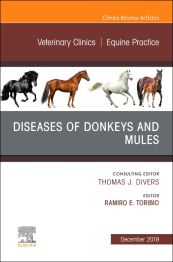
Diseases of Donkeys and Mules, An Issue of Veterinary Clinics of North America: Equine Practice, 1st Edition
Author :
By Ramiro E. Toribio, DVM, MS, PhD, DACVIM
This issue of Veterinary Clinics: Equine Practice, guest edited by Dr. Ramiro Toribio in collaboration with Consulting Editor Dr. Thomas Divers, is devoted to Diseases of Donkeys and Mules. Topics include: Endocrine and metabolic disorders of do
...view more
This issue of Veterinary Clinics: Equine Practice, guest edited by Dr. Ramiro Toribio in collaboration with Consulting Editor Dr. Thomas Divers, is devoted to Diseases of Donkeys and Mules. Topics include: Endocrine and metabolic disorders of donkeys; Gastrointestinal disorders of donkeys and mules; Clinical pathology of donkeys; Genetics, evolution, physiology in donkeys/mules; Nutrition and malnutrition; Donkey and mule welfare; Dermatological disorders of donkeys/mules; Anesthesia, analgesia, and sedation in donkeys/mules; Dental disorders of donkeys; Clinical evaluation and preventative care of the donkey; Respiratory disorders of donkeys; Donkey and mule behavior; Clinical Pharmacology of donkeys; Key aspects of donkey and mule reproduction; and Foot Care and Practical Farriery for the Donkey.
This issue of Veterinary Clinics: Equine Practice, guest edited by Dr. Ramiro Toribio in collaboration with Consulting Editor Dr. Thomas Divers, is devoted to Diseases of Donkeys and Mules. Topics include: Endocrine and metabolic disorders of donkeys; Gastrointestinal disorders of donkeys and mules; Clinical pathology of donkeys; Genetics, evolution, physiology in donkeys/mules; Nutrition and malnutrition; Donkey and mule welfare; Dermatological disorders of donkeys/mules; Anesthesia, analgesia, and sedation in donkeys/mules; Dental disorders of donkeys; Clinical evaluation and preventative care of the donkey; Respiratory disorders of donkeys; Donkey and mule behavior; Clinical Pharmacology of donkeys; Key aspects of donkey and mule reproduction; and Foot Care and Practical Farriery for the Donkey.
Author Information
By Ramiro E. Toribio, DVM, MS, PhD, DACVIM, Department of Clinical Sciences, College of Veterinary Medicine, The Ohio State University, Columbus, OH, USA
By Ramiro E. Toribio, DVM, MS, PhD, DACVIM, Department of Clinical Sciences, College of Veterinary Medicine, The Ohio State University, Columbus, OH, USA
https://www.elsevierhealth.com.au/diseases-of-donkeys-and-mules-an-issue-of-veterinary-clinics-of-north-america-equine-practice-9780323708746.html296581Diseases of Donkeys and Mules, An Issue of Veterinary Clinics of North America: Equine Practicehttps://www.elsevierhealth.com.au/media/catalog/product/9/7/9780323708746_6.jpg126.71168.95AUDInStock/Veterinary/Equine/Clinics/Veterinary/Equine/Clinics/Clinics/Veterinary/Equine/Japan Titles43350984388725505456450546665255041525984452631601418269243350964886536505456251451205259842This issue of Veterinary Clinics: Equine Practice, guest edited by Dr. Ramiro Toribio in collaboration with Consulting Editor Dr. Thomas Divers, is devoted to Diseases of Donkeys and Mules. Topics include: Endocrine and metabolic disorders of donkeys; Gastrointestinal disorders of donkeys and mules; Clinical pathology of donkeys; Genetics, evolution, physiology in donkeys/mules; Nutrition and malnutrition; Donkey and mule welfare; Dermatological disorders of donkeys/mules; Anesthesia, analgesia, and sedation in donkeys/mules; Dental disorders of donkeys; Clinical evaluation and preventative care of the donkey; Respiratory disorders of donkeys; Donkey and mule behavior; Clinical Pharmacology of donkeys; Key aspects of donkey and mule reproduction; and Foot Care and Practical Farriery for the Donkey. This issue of Veterinary Clinics: Equine Practice, guest edited by Dr. Ramiro Toribio in collaboration with Consulting Editor Dr. Thomas Divers, is devoted to Diseases of Donkeys and Mules. Topics include: Endocrine and metabolic disorders of donkeys; Gastrointestinal disorders of donkeys and mules; Clinical pathology of donkeys; Genetics, evolution, physiology in donkeys/mules; Nutrition and malnutrition; Donkey and mule welfare; Dermatological disorders of donkeys/mules; Anesthesia, analgesia, and sedation in donkeys/mules; Dental disorders of donkeys; Clinical evaluation and preventative care of the donkey; Respiratory disorders of donkeys; Donkey and mule behavior; Clinical Pharmacology of donkeys; Key aspects of donkey and mule reproduction; and Foot Care and Practical Farriery for the Donkey.00add-to-cart97803237087462019ProfessionalBy Ramiro E. Toribio, DVM, MS, PhD, DACVIM20191Book152w x 229h (6.00" x 9.00")Elsevier030 Oct 2019Please allow 10-14 working days for deliveryBy <STRONG>Ramiro E. Toribio</STRONG>, DVM, MS, PhD, DACVIM, Department of Clinical Sciences, College of Veterinary Medicine, The Ohio State University, Columbus, OH, USAClinicsClinicsThe Clinics: Veterinary MedicineUnited StatesNoNoNoNoPlease SelectPlease SelectPlease Select