


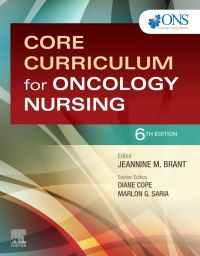
Core Curriculum for Oncology Nursing, 6th Edition
The only OCN® Exam review developed in collaboration with the Oncology Nursing Society (ONS), the Core Curriculum for Oncology Nursing, 6th Edition is the must-have OCN® certification review resources. This essential guide covers the entire scope of practice for oncology nursing and reflects important changes in the dynamic field of cancer treatment and care. The thoroughly revised sixth edition follows the latest test blueprint for the OCN® Exam and is presented in a streamlined outline format to help you focus on the most important information. Recognized as the definitive resource for concepts and practice in oncology nursing, this is the #1 review tool when preparing for OCN® certification!
New to this edition
- NEW! Content has been updated throughout to reflect the most recent Oncology Nursing Society (ONS) role delineation study, the latest OCN® Examination test blueprint, and important findings in cancer treatment and related nursing care, backed by the latest research evidence
- NEW! Chapters reflect the latest ONS information on nurse navigation, communication and shared decision-making, precision medicine, immunotherapy, cognitive and endocrine symptoms, and compassion fatigue
- NEW! Enhanced use of color in tables, boxes, and outlines improves visual appeal and learning
Key Features
- This definitive study resource for the OCN® Examination is the only such resource developed in collaboration with and endorsed by the Oncology Nursing Society
- Coverage of the entire scope of oncology care includes quality of life, protective mechanisms, gastrointestinal and urinary function, cardiopulmonary function, oncologic emergencies, the scientific basis for practice, health promotion, and professional performance
- Consistent outline format provides a quick-reference review that begins with theory and continues through the steps of the nursing process
- Emphasis on QSEN competencies is designed to reduce errors, with a focus on safety and evidence-based practice including Safety Alerts for cancer chemotherapy drugs
- Updates on cancer treatment and related nursing care include the most current and accurate information, preparing you for the OCN exam and for enhanced clinical practice
Author Information
| ISBN Number | 9780323595452 |
|---|---|
| Description Author List | By Oncology Nursing Society and Jeannine M. Brant, PhD, APRN, AOCN, FAAN, Oncology Nurse Specialist, Director and Lead Scientist, Collaborative Science and Innovation, Billings Clinic, Billings, Montana, USA |
| Copyright Year | 2020 |
| Edition Number | 6 |
| Format | Book |
| Trim | 216w x 276h (8.50" x 10.875") |
| Imprint | Saunders |
| Page Count | 558 |
| Publication Date | 25 Oct 2019 |
| Stock Status | Please allow 10-14 working days for delivery |


eBooks : Built for busy schedules & tailored for your goals.


Affordable knowledge, built for you
Get the resources you need-often at a lower cost than print. Quality content designed to support your goals, without stretching your budget.


Seamless access wherever you are


Always in sync


Tools the make learning stick
Your eBook is ready whenever you are!
1. Check your email for your access code.


2. Sign into or create your VitalSource account and redeem your code.


3. Open your eBook - ready whenever you are!
FAQ
The access code for your new eBook will be sent in your order confirmation email. Your code can also be accessed in your My Account section on the Elsevier webshop. If you do not receive your code within a few minutes, please check your spam folder.
Step-by-step guidance on how to download Bookshelf and also redeem your code can be found here.
The access code for your new eBook does not expire. However, we always suggest redeeming immediately after purchase to start experiencing the benefits of and insights from your purchase. Important to note - the code provided is a single use code and only valid for the edition you purchase. It does not provide access to past nor future editions of the title.
You will have unlimited access to your eBook on the device to which it was downloaded.
Discover the various learning features that our eBooks offer on the Bookshelf® Reader! For example, you can highlight different text passages, create notes and flashcards, have the text read to you, etc. Particularly practical: You can also use your eBooks offline. More information on the learning functions can be found on the Vitalsource page.
Quality is our top priority. That's why we collaborate with the leading eBook reader provider VitalSource. VitalSource has its own eBook reader Bookshelf®, which you can easily download. This reader is very user-friendly and offers more features than other standard readers. For example, you can highlight different text passages, create notes and flashcards, have the text read to you, etc. Particularly practical: You can also use your eBooks offline. More information can be found on the Vitalsource page.
Elsevier offers its eBooks in ePub format, as we believe this format is best suited to display our content ideally on as many devices as possible.
You can return your eBook within 13 days of purchase. eBooks that have been partially printed or flipped through more than 15% are excluded from returns.
Any questions ?
Top Picks from Our Community
Part One: The Care Continuum
1. Epidemiology, Prevention, and Health Promotion
2. Screening and Early Detection
3. Survivorship
4. Palliative and End-of-life Care
5. Navigation Across the Cancer Continuum
6. Communication and Shared Decision-Making
Part Two: Scientific Basis for Practice
7. Carcinogenesis
8. Immunology
9. Precision Medicine
10. Genetic Risk Factors
11. Clinical Trials
12. Bone and Soft Tissue Cancers
13. Breast Cancer
14. Gastrointestinal Cancers
15. Genitourinary Cancers
16. Head and Neck Cancers
17. HIV-Related Cancers
18. Leukemia
19. Lung Cancer
20. Lymphoma
21. Multiple Myeloma
22. Neurologic System Cancers
23. Reproductive System Cancers
24. Skin Cancers
Part Three: Treatment Modalities
25. Surgery
26. Blood and Marrow Transplantation
27. Radiation Therapy
28. Chemotherapy and Hormonal Therapy
29. Biotherapy, Immunotherapy, and Targeted Therapies
30. Support Therapies and Access Devices
Part Four: Palliation of Symptoms
31. Pharmacologic Interventions
32. Complementary and Alternative Modalities
33. Cardiovascular Symptoms
34. Cognitive Symptoms
35. Endocrine Symptoms
36. Fatigue
37. Gastrointestinal Symptoms
38. Genitourinary Symptoms
39. Hematologic and Immune Symptoms
40. Integumentary Symptoms
41. Musculoskeletal Symptoms
42. Neurologic Symptoms
43. Nutrition Issues
44. Pain
45. Respiratory Symptoms
46. Sleep Disturbances
Part Five: Psychosocial Dimensions of Care
47. Altered Body Image
48. Caregiver Burden
49. Cultural and Spiritual Care
50. Psychosocial Considerations
51. Sexuality and Sexual Dysfunction
Part Six: Oncologic Emergencies
52. Metabolic Emergencies
53. Structural Emergencies
Part Seven: Professional Practice
54. Standards of Practice and Professional Performance
55. Evidence-Based Practice
56. Principles of Education and Learning
57. Legal Issues
58. Ethical Issues
59. Professional Issues
60. Compassion Fatigue


