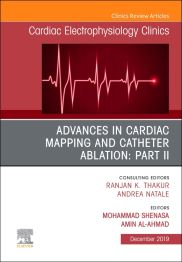
Advances in Cardiac Mapping and Catheter Ablation: Part II, An Issue of Cardiac Electrophysiology Clinics, 1st Edition
Author :
By Mohammad Shenasa, MD and Amin Al-Ahmad, MD
This issue of Cardiac Electrophysiology Clinics, guest edited by Mohammad Shenasa and Amin Al-Ahmad, is the second part of our Advances in Cardiac Mapping and Catheter Ablation issue. Article topics will include, but are not limited to, New Findings
...view more
This issue of Cardiac Electrophysiology Clinics, guest edited by Mohammad Shenasa and Amin Al-Ahmad, is the second part of our Advances in Cardiac Mapping and Catheter Ablation issue. Article topics will include, but are not limited to, New Findings in Atrial Fibrillation Mechanisms; Mapping and Ablation of Neuraxial in Patients with Ventricular Arrhythmias; How to Map and Ablate Rotors in Atrial Fibrillation; Post-ablation Atrial Arrhythmias; Substrate Mapping in Atrial Arrhythmias; Substrate Mapping in Ventricular Arrhythmias; Challenges in Ablation of Complex Congenital Heart Disease; Mapping and Ablation of Ventricular Arrhythmias from the RV and LV Outflow Tract; Novel Insights on Idiopathic VF and Early Repolarization; Novel Observations in Mapping and Ablation in Brugada Syndrome; Ablations of Ventricular Arrhythmias; Mapping and Ablation of Arrhythmias from uncommon sites; Mapping and Ablation of VT in Patients with HF and Cardiomyopathies; Mapping and Ablation of Unmappable VT, VT Storm, and Those in Acute Myocardial Infarction; Mapping and Ablation of Ventricle Arrhythmia in patients of LVAD; Fluoroless Catheter Ablation of Cardiac Arrhythmias; Toward a Uniform Ablation Protocol for Paroxysmal; Persistent and Permanent AF; and The Ideal Mapping System.
This issue of Cardiac Electrophysiology Clinics, guest edited by Mohammad Shenasa and Amin Al-Ahmad, is the second part of our Advances in Cardiac Mapping and Catheter Ablation issue. Article topics will include, but are not limited to, New Findings in Atrial Fibrillation Mechanisms; Mapping and Ablation of Neuraxial in Patients with Ventricular Arrhythmias; How to Map and Ablate Rotors in Atrial Fibrillation; Post-ablation Atrial Arrhythmias; Substrate Mapping in Atrial Arrhythmias; Substrate Mapping in Ventricular Arrhythmias; Challenges in Ablation of Complex Congenital Heart Disease; Mapping and Ablation of Ventricular Arrhythmias from the RV and LV Outflow Tract; Novel Insights on Idiopathic VF and Early Repolarization; Novel Observations in Mapping and Ablation in Brugada Syndrome; Ablations of Ventricular Arrhythmias; Mapping and Ablation of Arrhythmias from uncommon sites; Mapping and Ablation of VT in Patients with HF and Cardiomyopathies; Mapping and Ablation of Unmappable VT, VT Storm, and Those in Acute Myocardial Infarction; Mapping and Ablation of Ventricle Arrhythmia in patients of LVAD; Fluoroless Catheter Ablation of Cardiac Arrhythmias; Toward a Uniform Ablation Protocol for Paroxysmal; Persistent and Permanent AF; and The Ideal Mapping System.
Author Information
By Mohammad Shenasa, MD, Department of Cardiovascular Services, O’Conner Hospital, Heart & Rhythm Medical Group, San Jose CA and Amin Al-Ahmad, MD, Electrophysiologist, Texas Cardiac Arrhythmia Institute, Austin, TX
By Mohammad Shenasa, MD, Department of Cardiovascular Services, O’Conner Hospital, Heart & Rhythm Medical Group, San Jose CA and Amin Al-Ahmad, MD, Electrophysiologist, Texas Cardiac Arrhythmia Institute, Austin, TX
https://www.elsevierhealth.com.au/advances-in-cardiac-mapping-and-catheter-ablation-part-ii-an-issue-of-cardiac-electrophysiology-clinics-9780323683494.html296460Advances in Cardiac Mapping and Catheter Ablation: Part II, An Issue of Cardiac Electrophysiology Clinicshttps://www.elsevierhealth.com.au/media/catalog/product/9/7/9780323683494_6.jpg100.46133.95AUDInStock/Clinics/Medicine & Surgery/Cardiology/Medicine/Cardiology/Clinics/Clinics/Medicine/Cardiology/Japan Titles43887254431212505456950546665255041525985052631601418269243350884886536505455351451205259833This issue of Cardiac Electrophysiology Clinics, guest edited by Mohammad Shenasa and Amin Al-Ahmad, is the second part of our Advances in Cardiac Mapping and Catheter Ablation issue. Article topics will include, but are not limited to, New Findings in Atrial Fibrillation Mechanisms; Mapping and Ablation of Neuraxial in Patients with Ventricular Arrhythmias; How to Map and Ablate Rotors in Atrial Fibrillation; Post-ablation Atrial Arrhythmias; Substrate Mapping in Atrial Arrhythmias; Substrate Mapping in Ventricular Arrhythmias; Challenges in Ablation of Complex Congenital Heart Disease; Mapping and Ablation of Ventricular Arrhythmias from the RV and LV Outflow Tract; Novel Insights on Idiopathic VF and Early Repolarization; Novel Observations in Mapping and Ablation in Brugada Syndrome; Ablations of Ventricular Arrhythmias; Mapping and Ablation of Arrhythmias from uncommon sites; Mapping and Ablation of VT in Patients with HF and Cardiomyopathies; Mapping and Ablation of Unmappable VT, VT Storm, and Those in Acute Myocardial Infarction; Mapping and Ablation of Ventricle Arrhythmia in patients of LVAD; Fluoroless Catheter Ablation of Cardiac Arrhythmias; Toward a Uniform Ablation Protocol for Paroxysmal; Persistent and Permanent AF; and The Ideal Mapping System. This issue of Cardiac Electrophysiology Clinics, guest edited by Mohammad Shenasa and Amin Al-Ahmad, is the second part of our Advances in Cardiac Mapping and Catheter Ablation issue. Article topics will include, but are not limited to, New Findings in Atrial Fibrillation Mechanisms; Mapping and Ablation of Neuraxial in Patients with Ventricular Arrhythmias; How to Map and Ablate Rotors in Atrial Fibrillation; Post-ablation Atrial Arrhythmias; Substrate Mapping in Atrial Arrhythmias; Substrate Mapping in Ventricular Arrhythmias; Challenges in Ablation of Complex Congenital Heart Disease; Mapping and Ablation of Ventricular Arrhythmias from the RV and LV Outflow Tract; Novel Insights on Idiopathic VF and Early Repolarization; Novel Observations in Mapping and Ablation in Brugada Syndrome; Ablations of Ventricular Arrhythmias; Mapping and Ablation of Arrhythmias from uncommon sites; Mapping and Ablation of VT in Patients with HF and Cardiomyopathies; Mapping and Ablation of Unmappable VT, VT Storm, and Those in Acute Myocardial Infarction; Mapping and Ablation of Ventricle Arrhythmia in patients of LVAD; Fluoroless Catheter Ablation of Cardiac Arrhythmias; Toward a Uniform Ablation Protocol for Paroxysmal; Persistent and Permanent AF; and The Ideal Mapping System.00add-to-cart97803236834942019ProfessionalBy Mohammad Shenasa, MD and Amin Al-Ahmad, MD20201Book178w x 254h (7.00" x 10.00")Elsevier012 Nov 2019Please allow 10-14 working days for deliveryBy <STRONG>Mohammad Shenasa</STRONG>, MD, Department of Cardiovascular Services, O’Conner Hospital, Heart & Rhythm Medical Group, San Jose CA and <STRONG>Amin Al-Ahmad</STRONG>, MD, Electrophysiologist, Texas Cardiac Arrhythmia Institute, Austin, TXClinicsClinicsThe Clinics: Internal MedicineUnited StatesNoNoNoNoPlease SelectPlease SelectPlease Select