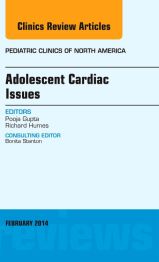
Adolescent Cardiac Issues, An Issue of Pediatric Clinics, 1st Edition
Author :
By Richard Humes, MD
Most physicians entering the field of pediatric cardiology are drawn to it by an interest in the wide variety of congenital heart defects which present at various ages. Most congenital heart disease will be evident in early life, presenting with cyan
...view more
Most physicians entering the field of pediatric cardiology are drawn to it by an interest in the wide variety of congenital heart defects which present at various ages. Most congenital heart disease will be evident in early life, presenting with cyanosis, heart murmur, congestive heart failure or shock. Textbooks in pediatric cardiology are filled overwhelmingly with chapters on the various congenital heart lesions which are encountered, both rare and common. However, practicing pediatric cardiologists will be quick to point out that a significant number of referrals to any practice do not involve congenital heart problems. Reviewing our own statistics at the Children’s Hospital of Michigan Cardiology Center for the past two years (2010-2012) reveals that outpatient visits for new patient consultations examined by age groups are: less than 1 year of age – 11%; 1-5 years – 23%; 6-10 years – 21%; 11-18 years – 45%. Retrospective data collected from billing codes, as in this brief survey, may imprecise. However, it does provide a snapshot of the usual referral problems encountered by pediatric cardiologists. In our practice, the most common overall reason for referral in all ages was “heart murmur, constituting 26% of total referrals. Second were rhythm and rhythm related problems (inclusive of palpitations, abnormal ECG and diagnosed premature beats) constituted 19% of the total. In the age group of interest for this book of 11-18 years, the most common presenting issues were rhythm related (23%) and chest pain (23%), followed by syncope or dizziness (19%) and heart murmur (12%). Congenital heart disease diagnoses encountered in the 11 to 18 year age group comprised only 6.5% of referrals within that age group. It is likely that many of these were not new diagnoses (with a few exceptions), but rather represented transfers to our practice. Our own outpatient clinical experience reveals that the majority of outpatients referred by pediatricians for pediatric cardiology evaluation are between the ages of 11 and 18. The majority of these new referrals are not for congenital heart disease. Our intent for this edition of Pediatric Clinics of North America is to describe the types of problems which seem to be of concern to the pediatric community within this age group and to describe strategies for evaluation. "This issue of PCNA surely will prove to be a valuable collection for any motivated primary care professional dealing with adolescents health."Reviewed by: Neel Kamal, Feb14
Most physicians entering the field of pediatric cardiology are drawn to it by an interest in the wide variety of congenital heart defects which present at various ages. Most congenital heart disease will be evident in early life, presenting with cyanosis, heart murmur, congestive heart failure or shock. Textbooks in pediatric cardiology are filled overwhelmingly with chapters on the various congenital heart lesions which are encountered, both rare and common. However, practicing pediatric cardiologists will be quick to point out that a significant number of referrals to any practice do not involve congenital heart problems. Reviewing our own statistics at the Children’s Hospital of Michigan Cardiology Center for the past two years (2010-2012) reveals that outpatient visits for new patient consultations examined by age groups are: less than 1 year of age – 11%; 1-5 years – 23%; 6-10 years – 21%; 11-18 years – 45%. Retrospective data collected from billing codes, as in this brief survey, may imprecise. However, it does provide a snapshot of the usual referral problems encountered by pediatric cardiologists. In our practice, the most common overall reason for referral in all ages was “heart murmur, constituting 26% of total referrals. Second were rhythm and rhythm related problems (inclusive of palpitations, abnormal ECG and diagnosed premature beats) constituted 19% of the total. In the age group of interest for this book of 11-18 years, the most common presenting issues were rhythm related (23%) and chest pain (23%), followed by syncope or dizziness (19%) and heart murmur (12%). Congenital heart disease diagnoses encountered in the 11 to 18 year age group comprised only 6.5% of referrals within that age group. It is likely that many of these were not new diagnoses (with a few exceptions), but rather represented transfers to our practice. Our own outpatient clinical experience reveals that the majority of outpatients referred by pediatricians for pediatric cardiology evaluation are between the ages of 11 and 18. The majority of these new referrals are not for congenital heart disease. Our intent for this edition of Pediatric Clinics of North America is to describe the types of problems which seem to be of concern to the pediatric community within this age group and to describe strategies for evaluation. "This issue of PCNA surely will prove to be a valuable collection for any motivated primary care professional dealing with adolescents health."Reviewed by: Neel Kamal, Feb14
Author Information
By Richard Humes, MD, Children's Hospital of Michigan-Cardiology, Detroit, MI
"This volume of Pediatric Clinics of North America successfully achieves its aimed objective in offering the up to date information on the subject of Cardiac Issues of the adolescents.
This issue of PCNA surely will prove to be a valuable collection for any motivated primary care professional dealing with adolescents health." Reviewed by: Neel Kamal, Feb14
https://www.elsevierhealth.com.au/adolescent-cardiac-issues-an-issue-of-pediatric-clinics-9780323266765.html294040Adolescent Cardiac Issues, An Issue of Pediatric Clinicshttps://www.elsevierhealth.com.au/media/catalog/product/9/7/9780323266765_6.jpg126.71168.95AUDInStock/Clinics/Medicine & Surgery/Pediatrics/Medicine/Pediatrics/Clinics/Medicine & Surgery/Clinical/General Medicine/Medicine/Clinical/General Medicine/Clinics/Medicine/Clinical/General Medicine/Medicine/Pediatrics/Japan Titles438872543351495054578505466643351025054591525504152598745259859526316014182692433508848865365054553514512052598335259873<p>Most physicians entering the field of pediatric cardiology are drawn to it by an interest in the wide variety of congenital heart defects which present at various ages. Most congenital heart disease will be evident in early life, presenting with cyanosis, heart murmur, congestive heart failure or shock. Textbooks in pediatric cardiology are filled overwhelmingly with chapters on the various congenital heart lesions which are encountered, both rare and common. However, practicing pediatric cardiologists will be quick to point out that a significant number of referrals to any practice do not involve congenital heart problems. Reviewing our own statistics at the Children’s Hospital of Michigan Cardiology Center for the past two years (2010-2012) reveals that outpatient visits for new patient consultations examined by age groups are: less than 1 year of age – 11%; 1-5 years – 23%; 6-10 years – 21%; 11-18 years – 45%. Retrospective data collected from billing codes, as in this brief survey, may imprecise. However, it does provide a snapshot of the usual referral problems encountered by pediatric cardiologists. In our practice, the most common overall reason for referral in all ages was “heart murmur, constituting 26% of total referrals. Second were rhythm and rhythm related problems (inclusive of palpitations, abnormal ECG and diagnosed premature beats) constituted 19% of the total. In the age group of interest for this book of 11-18 years, the most common presenting issues were rhythm related (23%) and chest pain (23%), followed by syncope or dizziness (19%) and heart murmur (12%). Congenital heart disease diagnoses encountered in the 11 to 18 year age group comprised only 6.5% of referrals within that age group. It is likely that many of these were not new diagnoses (with a few exceptions), but rather represented transfers to our practice. Our own outpatient clinical experience reveals that the majority of outpatients referred by pediatricians for pediatric cardiology evaluation are between the ages of 11 and 18. The majority of these new referrals are not for congenital heart disease. Our intent for this edition of Pediatric Clinics of North America is to describe the types of problems which seem to be of concern to the pediatric community within this age group and to describe strategies for evaluation. <i>"</i><i>This issue of PCNA surely will prove to be a valuable collection for any motivated primary care professional dealing with adolescents health."</i><b>Reviewed by:</b> Neel Kamal, Feb14</p> <p>Most physicians entering the field of pediatric cardiology are drawn to it by an interest in the wide variety of congenital heart defects which present at various ages. Most congenital heart disease will be evident in early life, presenting with cyanosis, heart murmur, congestive heart failure or shock. Textbooks in pediatric cardiology are filled overwhelmingly with chapters on the various congenital heart lesions which are encountered, both rare and common. However, practicing pediatric cardiologists will be quick to point out that a significant number of referrals to any practice do not involve congenital heart problems. Reviewing our own statistics at the Children’s Hospital of Michigan Cardiology Center for the past two years (2010-2012) reveals that outpatient visits for new patient consultations examined by age groups are: less than 1 year of age – 11%; 1-5 years – 23%; 6-10 years – 21%; 11-18 years – 45%. Retrospective data collected from billing codes, as in this brief survey, may imprecise. However, it does provide a snapshot of the usual referral problems encountered by pediatric cardiologists. In our practice, the most common overall reason for referral in all ages was “heart murmur, constituting 26% of total referrals. Second were rhythm and rhythm related problems (inclusive of palpitations, abnormal ECG and diagnosed premature beats) constituted 19% of the total. In the age group of interest for this book of 11-18 years, the most common presenting issues were rhythm related (23%) and chest pain (23%), followed by syncope or dizziness (19%) and heart murmur (12%). Congenital heart disease diagnoses encountered in the 11 to 18 year age group comprised only 6.5% of referrals within that age group. It is likely that many of these were not new diagnoses (with a few exceptions), but rather represented transfers to our practice. Our own outpatient clinical experience reveals that the majority of outpatients referred by pediatricians for pediatric cardiology evaluation are between the ages of 11 and 18. The majority of these new referrals are not for congenital heart disease. Our intent for this edition of Pediatric Clinics of North America is to describe the types of problems which seem to be of concern to the pediatric community within this age group and to describe strategies for evaluation. <i>"</i><i>This issue of PCNA surely will prove to be a valuable collection for any motivated primary care professional dealing with adolescents health."</i><b>Reviewed by:</b> Neel Kamal, Feb14</p>00add-to-cart97803232667652013ProfessionalBy Richard Humes, MD20141BookOtherElsevier02 Dec 2013Please allow 10-14 working days for deliveryBy <STRONG>Richard Humes</STRONG>, MD, Children's Hospital of Michigan-Cardiology, Detroit, MIClinicsClinicsThe Clinics: Internal MedicineUnited StatesNoNoNoNoPlease SelectPlease SelectPlease Select