


Skip to Content

*Promotion for Australian customers only
Terms & conditions

Addiction Medicine, 2nd Edition

Author :
By Bankole Johnson
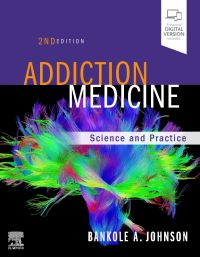
Integrating scientific knowledge with today’s most effective treatment options, Addiction Medicine: Science and Practice, 2nd Edition, provides a wealth of information on addictions to substances and behavioral addictions. It discusses the concrete ...view more

Integrating scientific knowledge with today’s most effective treatment options, Addiction Medicine: Science and Practice, 2nd Edition, provides a wealth of information on addictions to substances and behavioral addictions. It discusses the concrete research on how the brain and body are affected by addictions, improving your understanding of how patients develop addictions and how best to personalize treatment and improve outcomes. This essential text is ideal for anyone who deals with patients with addictions in clinical practice, including psychiatrists, health psychologists, pharmacologists, social workers, drug counselors, trainees, and general physicians/family practitioners.
ISBN :
9780323754408
Publication Date :
12-12-2019
Stock Status :
IN STOCK
Earn 31 Points
Earn 27 Points
Add to Cart

Integrating scientific knowledge with today’s most effective treatment options, Addiction Medicine: Science and Practice, 2nd Edition, provides a wealth of information on addictions to substances and behavioral addictions. It discusses the concrete research on how the brain and body are affected by addictions, improving your understanding of how patients develop addictions and how best to personalize treatment and improve outcomes. This essential text is ideal for anyone who deals with patients with addictions in clinical practice, including psychiatrists, health psychologists, pharmacologists, social workers, drug counselors, trainees, and general physicians/family practitioners.


Key Features
  • Clearly explains the role of brain function in drug taking and other habit-forming behaviors, and shows how to apply this biobehavioral framework to the delivery of evidence-based treatment.
  • Provides clinically relevant details on not only traditional sources of addiction such as cocaine, opiates, and alcohol, but also more recently recognized substances of abuse (e.g., steroids, inhalants) as well as behavioral addictions (e.g., binge eating, compulsive gambling, hoarding).
  • Discusses current behavioral and medical therapies in depth, while also addressing social contexts that may affect personalized treatment.
  • Contains new information on compliance-enhancing interventions, cognitive behavioral treatments, behavioral management, and other psychosocial interventions.
  • Includes neurobiological, molecular, and behavioral theories of addiction, and includes a section on epigenetics.
  • Contains up-to-date information throughout, including a new definition of status epilepticus, a current overview of Lennox Gastaut syndrome, and updates on new FDA-approved drugs for pediatric neurological disorders.
  • Features expanded sections on evidence-based treatment options including pharmacotherapy, pharmacogenetics, and potential vaccines.
  • Addresses addiction in regards to specific populations, including adolescents, geriatric, pregnant women, and health care professionals.
  • Includes contributions from expert international authors, making this a truly global reference to addiction medicine.
  • Enhanced eBook version included with purchase. Your enhanced eBook allows you to access all of the text, figures, and references from the book on a variety of devices.

Author Information
By Bankole Johnson
More Information
ISBN Number 9780323754408
Description Author List By Bankole Johnson
Copyright Year 2020
Edition Number 2
Format Book
Trim 216w x 276h (8.50" x 10.875")
Illustrations 150
Imprint Saunders
Page Count 1114
Publication Date 12 Dec 2019
Stock Status IN STOCK

eBooks : Built for busy schedules & tailored for your goals.

Affordable knowledge, built for you

Get the resources you need-often at a lower cost than print. Quality content designed to support your goals, without stretching your budget.

Seamless access wherever you are

Open your eBook on your laptop, tablet, or phone - online or offline. Learning fits into your life, no matter where you go.

Always in sync

Start reading on one device and pick up right where you left off on another. Your progress and notes stay with you, every step of the way.

Tools the make learning stick

Highlight key points, take notes, create flashcards, or listen to your eBook read aloud. Interactive features help you deepen your knowledge, your way.


Your eBook is ready whenever you are!

1.  Check your email for your access code.

2.  Sign into or create your VitalSource account and redeem your code.

3.  Open your eBook - ready whenever you are!

FAQ

The access code for your new eBook will be sent in your order confirmation email. Your code can also be accessed in your My Account section on the Elsevier webshop. If you do not receive your code within a few minutes, please check your spam folder.


Step-by-step guidance on how to download Bookshelf and also redeem your code can be found here.


The access code for your new eBook does not expire. However, we always suggest redeeming immediately after purchase to start experiencing the benefits of and insights from your purchase. Important to note - the code provided is a single use code and only valid for the edition you purchase. It does not provide access to past nor future editions of the title.


You will have unlimited access to your eBook on the device to which it was downloaded.


Discover the various learning features that our eBooks offer on the Bookshelf® Reader! For example, you can highlight different text passages, create notes and flashcards, have the text read to you, etc. Particularly practical: You can also use your eBooks offline. More information on the learning functions can be found on the Vitalsource page.


Quality is our top priority. That's why we collaborate with the leading eBook reader provider VitalSource. VitalSource has its own eBook reader Bookshelf®, which you can easily download. This reader is very user-friendly and offers more features than other standard readers. For example, you can highlight different text passages, create notes and flashcards, have the text read to you, etc. Particularly practical: You can also use your eBooks offline. More information can be found on the Vitalsource page.


Elsevier offers its eBooks in ePub format, as we believe this format is best suited to display our content ideally on as many devices as possible.


You can return your eBook within 13 days of purchase. eBooks that have been partially printed or flipped through more than 15% are excluded from returns.

Any questions ?

Support Center >

Top Picks from Our Community

Part I: History, Perspective, Epidemiology, Dx and Classification
1. Emerging Health Perspectives
2. The Epidemiology of Alcohol and Drug Disorders
3. United States Federal Drug Policy
4. Historical Perspectives of Addiction
5. Diagnosis and Classification of Substance Use Disorders
Part II: Behavioral Theories for Substance Use Disorder
6. Drug Reinforcement in Animals
7. Role of the Human Laboratory Studies in the Development of Medications for Alcohol and Substance Abuse Disorders
8. Conditioning of Addiction
9. Overlapping Striatal Circuits and Molecular Mechanisms in Rodent Models of Addiction and Depression
10. The Role of Endocannabinoids in Amphetamine-Driven Actions in Dopamine Neurons: Implications for Understanding and Treating Dysfunction in the Mesolimbic Circuit
11. Pain and Negative Affect
12. Genetic Vulnerability to Substance Use Disorders
13. Assessment and Treatment of Addiction in Best Practices and New Frontiers in a Direct to Consumer Age
14. Metabolomics in Drug Response and Addiction
Part III: Visualizations and Workings of the Addicted Brain
15. Visualization and Workings of the Addicted Brain
16. Neurobiological Basis of Drug Reward and Reinforcement
17. Neurobehavioral Toxicology of Substances of Abuse
18. Animal Models of Substance Use Disorders: Motivational Perspective
19. Novel Methodologies: Proteomic Approaches in Substance Abuse Research
20. Neuroinflammatory Processes in Drug Addiction
Part IV: Clinical Aspects of Alcohol and Drug Addiction
21. Alcohol: Clinical Aspects
22. Cocaine
23. Nicotine
24. Cannabis: An Overview of the Empirical Literature
25. Opiates and Prescription Drugs
26. Clinical Aspects of Methamphetamine
27. Sedative-Hypnotics and Anxiolytics
28. Clinical Aspects of Inhalant Addiction
29. Anabolic-Androgenic Steroids
30. Caffeine
31. Serotonergic Hallucinogens
32. Ketamine and Phencyclidine
Part V: Behavioral Addictions and Treatment
33. The Biology and Treatment of Pathological Gambling
34. Implications of "Food Addiction" for Understanding and Treating Binge Eating Disorder
35. Compulsive Buying
36. Sexual Behavior as an Addictive or Compulsive Phenomenon
37. New Era of Internet Addiction Research in China
38. Hoarding as a Behavioral Addiction
Part VI: Treatment and Application: Behavioral Treatments
39. Motivational Interviewing: Emerging Theory, Research, and Practice
40. Cognitive Behavioral Therapy for Addiction
41. Community Reinforcement Approach and Contingency Management Therapies
42. Relapse Prevention and Recycling in Addiction
43. Brief and e-Health Interventions for the Treatment of Alcohol or Other Drug Addiction
44. Self-Help Approaches for Addiction
Section VII: Treatment and Application: Group Treatments and Specific Settings
45. Community Clinics
46. Unhealthy Alcohol and Other Drug Use in Primary Care
47. Criminal Justice System and Addiction Treatment
48. Adolescent Neurocognitive Development and School-Based Drug Abuse Prevention and Treatment
49. The Therapeutic Community for Drug-Abuse Treatment: A Journey Yet Unfolding in the Recovery Movement
50. Substance Use-Focused Mutual-Help Groups: Processes and Outcomes
Section VIII: Treatment and Application Pharmacotherapy
51. Pharmacotherapy for Alcoholism and Some Related Psychiatric and Addictive Disorders: Scientific Basis and Clinical Findings
52. Alcohol Withdrawal: Treatment and Application
53. Pharmacotherapy of Cocaine Addiction
54. Opioid Overdose
55. Methamphetamine
56. Potential Pharmacotherapies for Cannabis Dependence
57. Hallucinogens
Section IX: Molecular Genetics, Alternative Therapies, and Other Topics in the Treatment of Addiction
58. Molecular Genetics and the Treatment of Addiction
59. Physical Considerations for Treatment Complications of Alcohol and Drug Use and Misuse
60. Quadruple Diagnosis: Substance Use Disorder, Comorbid Psychopathology, Human Immunodeficiency Virus Infection, and Hepatitis C Virus Infection
61. Substance Use Stigma as a Barrrier to Treatment and Recovery
62. Religiousness, Spirituality, and Addiction: An Evidence-Based Review
Section X: Computer Modeling
63. In Silico Models of Alcohol Kinetics: A Deterministic Approach
64. In Silico Models of Alcohol Dependence Treatment: Stochastic Approach
65. Dynamic and Systems-Based Models for Evaluating Hypotheses Related to Predicting Treatment Response
Part XI: Dependence in Specific Populations
66. Enhancing Positive Outcomes for Children of Substance-Abusing Parents
67. Alcohol and Substance Abuse in African Americans
68. Gays, Lesbians, and Bisexuals
69. Substance Use Disorders in Health Care Professionals
70. Identification and Treatment of Alcohol or Drug Dependence in the Elderly
71. Alcohol and Drugs of Abuse in Pregnant Women: Effects on Fetus and Newborn, Mode of Action, and Maternal Treatment
Part XII: Legal, Disability and Rehabilitative Issues
72. Forensic Issues
73. Disability and Addiction
74. The Homeless
75. To Open Up New Vistas in Basic and Preclinical Addiction Research
Doody's Core Titles® 2022
Write Your Own Review
Only registered users can write reviews. Please sign in or create an account