


Skip to Content

Abdominal Imaging, 1st Edition

Author :
By Manjiri Dighe, Joseph R. Grajo and Leslie Lee
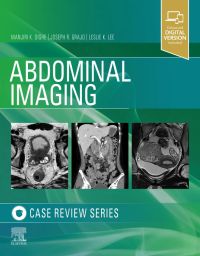
Master the critical imaging content you need to know with this newly consolidated title in the popular Case Review series. Abdominal Imaging offers a highly illustrated, case-based preparation for board review to help residents and recertifying radio ...view more
Master the critical imaging content you need to know with this newly consolidated title in the popular Case Review series. Abdominal Imaging offers a highly illustrated, case-based preparation for board review to help residents and recertifying radiologists succeed on exams, demonstrate a clinical understanding of gastrointestinal and genitourinary imaging, and improve imaging accuracy and interpretation. Cases include both common and difficult-to-diagnose disorders including gallbladder diseases, pancreatitis and pancreatic masses, staging and identification of gynecologic malignancies, fluoroscopy findings in GI and GU diseases, and much more.
ISBN :
9780323679848
Publication Date :
19-05-2021
Stock Status :
Please allow 3-4 weeks for delivery
Earn 8 Points
Earn 7 Points
Add to Cart
Master the critical imaging content you need to know with this newly consolidated title in the popular Case Review series. Abdominal Imaging offers a highly illustrated, case-based preparation for board review to help residents and recertifying radiologists succeed on exams, demonstrate a clinical understanding of gastrointestinal and genitourinary imaging, and improve imaging accuracy and interpretation. Cases include both common and difficult-to-diagnose disorders including gallbladder diseases, pancreatitis and pancreatic masses, staging and identification of gynecologic malignancies, fluoroscopy findings in GI and GU diseases, and much more.

Key Features
  • Presents more than 160 high-yield case studies organized by level of difficulty, helping you build your knowledge and confidence in stages.
  • Includes more than 650 multiple-choice questions, answers, and rationales that mimic the format of certification exams.
  • Uses short, easily digestible chapters covering the full range of abdominal imaging for efficient, effective learning and exam preparation.
  • Features 700+ high-quality, full-color images spanning the GI and GU systems and pertinent patient cases reflecting current abdominal radiology practice. Images include fluoroscopy and plain films, computed tomography, and magnetic resonance imaging, with coverage of key areas such as prostate MRI and rectal MRI, CT enterography, liver CT and MRI, and renal masses on CT and MRI.
  • Consolidates topics covered in Gastrointestinal Imaging: Case Review and Genitourinary Imaging: Case Review into a single, convenient resource. 
  • Enhanced eBook version included with purchase. Your enhanced eBook allows you to access bonus images plus all of the text, figures, and references from the book on a variety of devices.

Author Information
By Manjiri Dighe; Joseph R. Grajo and Leslie Lee
More Information
ISBN Number 9780323679848
Description Author List By Manjiri Dighe; Joseph R. Grajo and Leslie Lee
Copyright Year 2022
Edition Number 1
Format Book
Trim 216w x 276h (8.50" x 10.875")
Illustrations Approx. 926 illustrations
Imprint Elsevier
Page Count 310
Publication Date 19 May 2021
Stock Status Please allow 3-4 weeks for delivery

eBooks : Built for busy schedules & tailored for your goals.

Affordable knowledge, built for you

Get the resources you need-often at a lower cost than print. Quality content designed to support your goals, without stretching your budget.

Seamless access wherever you are

Open your eBook on your laptop, tablet, or phone - online or offline. Learning fits into your life, no matter where you go.

Always in sync

Start reading on one device and pick up right where you left off on another. Your progress and notes stay with you, every step of the way.

Tools the make learning stick

Highlight key points, take notes, create flashcards, or listen to your eBook read aloud. Interactive features help you deepen your knowledge, your way.


Your eBook is ready whenever you are!

1.  Check your email for your access code.

2.  Sign into or create your VitalSource account and redeem your code.

3.  Open your eBook - ready whenever you are!

FAQ

The access code for your new eBook will be sent in your order confirmation email. Your code can also be accessed in your My Account section on the Elsevier webshop. If you do not receive your code within a few minutes, please check your spam folder.


Step-by-step guidance on how to download Bookshelf and also redeem your code can be found here.


The access code for your new eBook does not expire. However, we always suggest redeeming immediately after purchase to start experiencing the benefits of and insights from your purchase. Important to note - the code provided is a single use code and only valid for the edition you purchase. It does not provide access to past nor future editions of the title.


You will have unlimited access to your eBook on the device to which it was downloaded.


Discover the various learning features that our eBooks offer on the Bookshelf® Reader! For example, you can highlight different text passages, create notes and flashcards, have the text read to you, etc. Particularly practical: You can also use your eBooks offline. More information on the learning functions can be found on the Vitalsource page.


Quality is our top priority. That's why we collaborate with the leading eBook reader provider VitalSource. VitalSource has its own eBook reader Bookshelf®, which you can easily download. This reader is very user-friendly and offers more features than other standard readers. For example, you can highlight different text passages, create notes and flashcards, have the text read to you, etc. Particularly practical: You can also use your eBooks offline. More information can be found on the Vitalsource page.


Elsevier offers its eBooks in ePub format, as we believe this format is best suited to display our content ideally on as many devices as possible.


You can return your eBook within 13 days of purchase. eBooks that have been partially printed or flipped through more than 15% are excluded from returns.

Any questions ?

Support Center >

Top Picks from Our Community

Opening Round

1. Portal venous gas; mesenteric ischemia

2. Focal Nodular Hyperplasia

3. Cirrhosis and portal venous hypertension

4. Hepatic Adenoma

5. Budd Chiari

6. Acute cholecystitis

7. Gallbladder perforation

8. Porcelian gallbladder

9. Gallbladder polyp

10. Acute pancreatitis

11. Chronic pancreatitis

12. Pancreatic Cancer

13. Splenic abscess

14. Splenic cyst

15. Splenic Gamna Gandy bodies

16. Wandering spleen

17. Splenic laceration

18. Adrenal myelolipoma

19. Adrenal cyst

20. Lipid poor adrenal adenoma

21. Deep renal laceration with active bleeding

22. Acute obstructing ureteral calculus

23. Acute pyelonephritis

24. Horseshoe kidney

25. Crossed fused ectopia

26. Retrocaval ureter

27. Renal stone

28. Bladder cancer (Synchronous transitional cell carcinoma of the bladder and ureter).

29. Bladder cancer

30. Urethral diverticulum

31. Acute Emphysematous cystitis

32. Extraperitoneal bladder rupture

33. Bladder distension/Urinary retention

34. Mature cystic teratoma

35. Bicornuate uterus

36. Vaginal wall cyst

37. Infected Bartholin’s cyst

38. Endometrial carcinoma

39. Endometriomas

40. C-section defect

41. Fibroids

42. Ovarian vein thrombosis

43. Normal ovaries and corpus luteum

44. Proximal fallopian tube occlusion/hydrosalpinx

45. Adenomyosis

46. Testicular torsion

47. Fournier's gangrene

48. Esophageal adenocarcinoma, with esophageal stent migration

49. Cricopharyngeal bar

50. Schatzki Ring

51. Small Bowel Obstruction

52. Contrast enema; large bowel obstruction

53. Diverticulitis

54. Colon cancer

55. Pseudomembranous colitis

56. Acute appendicitis CT and US

57. VP Shunt Pseudocyst

58. Malpositioned enteric tube

59. Ascites

60. Intraperitoneal free air on supine abdominal radiograph

Fair Game

61. Hepatocellular Carcinoma

62. Fatty liver; Occult liver metastasis

63. Intrahepatic cholangiocarcinoma

64. Hepatic Abscess

65. Gallbladder cancer

66. Emphysematous cholecystitis

67. Mirizzi’s syndrome

68. Primary Sclerosing Cholangitis

69. Pancreas divisum

70. Pancreatic laceration

71. Pancreatic laceration

72. Splenic angiosarcoma with liver metastases

73. Splenic hamartoma

74. Bilateral adrenal hemorrhage

75. Pheochromocytoma

76. Renal arteriovenous shunt

77. Fibromusclar dysplasia

78. Acquired cystic kidney disease

79. Renal cell carcinoma with IVC thrombus

80. Deep renal laceration (IV)

81. Renal lymphoma with diffuse infiltration

82. Angiomyolipoma with hemorrhage

83. Pelvic kidney

84. Forniceal rupture

85. Renal devascularization (Grade V)

86. Urachal remnant adenocarcinoma

87. Urethral diverticulum cancer

88. Bladder rupture

89. Leiomyosarcoma

90. Cervical carcinoma

91. Endometriosis with adenomyosis

92. Submucosal fibroid

93. Abdominal wall endometrioma

94. Acute ovarian torsion

95. Mayer-Rokitansky-Küster-Hauser (MRKH) syndrome

96. Testicular carcinoma with retroperitoneal mass

97. Testicular carcinoma with retroperitoneal mass

98. Prostate abscess

99. Prostate anatomy on MRI

100. Prostatitis

101. Prostate Adenocarcinoma

102. Gastric emphysema

103. Slipped gastric band

104. Roux-en-Y Gastric Bypass; Gastro-gastric fistula

105. Nissen fundoplication

106. Paraesophageal hernia, Type III

107. Gastrointestinal stromal tumor (GIST) with metastasis to liver

108. Small bowel lymphoma

109. Small bowel carcinoid

110. Small bowel Gastrointestinal stromal tumor (GIST)

111. Acute mesenteric ischemia

112. Epiploic appendagitis

113. Epithelial appendiceal neoplasm

114. Diaphragmatic herniation

Challenge

115. MRI Safety

116. Iron overload

117. Inflammatory Pseudotumor

118. Hereditary Hemorrhagic Telengiectasia

119. Fibrolamellar hepatocellular carcinoma

120. Perforated peptic ulcer

121. Biliary Cystadenoma

122. Biliary stricture post liver transplantation

123. Ectopic pancreas

124. Insulinoma

125. IgG4-related autoimmune pancreatitis

126. Main duct IPMN

127. Cystic pancreatic lesion

128. Splenic sarcoidosis

129. Splenic rupture

130. Splenic lymphangiomatosis

131. Adrenocortical carcinoma

132. Adrenal Castleman's disease

133. Renal abscess

134. Acute cholecystitis

135. Bosniak classification

136. Bladder carcinoma staging

137. Perivascular epitheloid cell tumor (PEComa) of the uterus

138. Rectal endometriosis

139. Cervical carcinoma staging

140. Endometrial carcinoma staging

141. Ovarian metastases

142. Ovarian carcinoma staging

143. Ovarian serous low grade tumor

144. Granulosa cell tumor

145. Endometroid carcinoma

146. C-section scar implantation of pregnancy

147. Intravascular leiomyomatosis

148. Placenta accreta spectrum

149. Penile fracture

150. Penile mass

151. Peyronie's disease

152. Prostate cancer with extraprostatic extension

153. Post-prostatectomy prostate cancer recurrence

154. Gastric lymphoma

155. Krukenberg tumor

156. Crohn’s Disease – Active Inflammation

157. Crohn's Disease: Stricture

158. Acute graft-versus-host disease (GVHD) involving small bowel

159. Internal hernia

160. Intussuception

161. Villous adenoma of the rectum

162. T3 Rectal adenocarcinoma

163. Cervical cancer

164. Fistula-in-ano

165. MRI in pregnancy: acute appendicitis

Write Your Own Review
Only registered users can write reviews. Please sign in or create an account