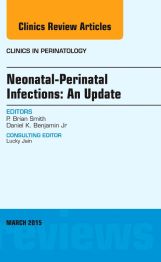
Neonatal-Perinatal Infections: An Update, An Issue of Clinics in Perinatology, 1st Edition
Author :
By Brian Smith, MD
In this issue the Guest Editors provide a contemporary look at the epidemiology, clinical manifestations, treatment and outcomes for neonatal-perinatal infections. Contributors include neonatologists, infectious disease, and critical care specialist
...view more
In this issue the Guest Editors provide a contemporary look at the epidemiology, clinical manifestations, treatment and outcomes for neonatal-perinatal infections. Contributors include neonatologists, infectious disease, and critical care specialists with a wide variety of research interests in this arena. Readers will be exposed to the latest information on dosing of antibiotics, antivirals, and antifungals. This information is critical in the infant population given the rapid changes in physiology, metabolic pathways and renal elimination that occur over the first months of life. There is an extensive examination of infectious processes that commonly present in infants including meningitis, bloodstream infections, and urinary tract infections. Additional topics include infectious processes affecting the newborn (chorioamnionitis and TORCH infections) and premature infants (necrotizing enterocolitis). Specific pathogens are highlighted in articles on HSV, CMV/VZV, staphylococcal species, and Candida. Finally, the rationale for the most recent changes to guidelines for initiating therapy for early-onset neonatal sepsis are reviewed.
In this issue the Guest Editors provide a contemporary look at the epidemiology, clinical manifestations, treatment and outcomes for neonatal-perinatal infections. Contributors include neonatologists, infectious disease, and critical care specialists with a wide variety of research interests in this arena. Readers will be exposed to the latest information on dosing of antibiotics, antivirals, and antifungals. This information is critical in the infant population given the rapid changes in physiology, metabolic pathways and renal elimination that occur over the first months of life. There is an extensive examination of infectious processes that commonly present in infants including meningitis, bloodstream infections, and urinary tract infections. Additional topics include infectious processes affecting the newborn (chorioamnionitis and TORCH infections) and premature infants (necrotizing enterocolitis). Specific pathogens are highlighted in articles on HSV, CMV/VZV, staphylococcal species, and Candida. Finally, the rationale for the most recent changes to guidelines for initiating therapy for early-onset neonatal sepsis are reviewed.
Author Information
By Brian Smith, MD, Duke University Medical Center, Durham, NC
https://www.elsevierhealth.com.au/neonatal-perinatal-infections-an-update-an-issue-of-clinics-in-perinatology-9780323376372.html294411Neonatal-Perinatal Infections: An Update, An Issue of Clinics in Perinatologyhttps://www.elsevierhealth.com.au/media/catalog/product/9/7/9780323376372_7.jpg122.96163.94AUDInStock/Clinics/Medicine/Obstetrics & Gynecology/Clinics/Clinics/Medicine/Obstetrics & Gynecology/Japan Titles438872550546085054666525504152598955263160In this issue the Guest Editors provide a contemporary look at the epidemiology, clinical manifestations, treatment and outcomes for neonatal-perinatal infections. Contributors include neonatologists, infectious disease, and critical care specialists with a wide variety of research interests in this arena. Readers will be exposed to the latest information on dosing of antibiotics, antivirals, and antifungals. This information is critical in the infant population given the rapid changes in physiology, metabolic pathways and renal elimination that occur over the first months of life. There is an extensive examination of infectious processes that commonly present in infants including meningitis, bloodstream infections, and urinary tract infections. Additional topics include infectious processes affecting the newborn (chorioamnionitis and TORCH infections) and premature infants (necrotizing enterocolitis). Specific pathogens are highlighted in articles on HSV, CMV/VZV, staphylococcal species, and Candida. Finally, the rationale for the most recent changes to guidelines for initiating therapy for early-onset neonatal sepsis are reviewed. In this issue the Guest Editors provide a contemporary look at the epidemiology, clinical manifestations, treatment and outcomes for neonatal-perinatal infections. Contributors include neonatologists, infectious disease, and critical care specialists with a wide variety of research interests in this arena. Readers will be exposed to the latest information on dosing of antibiotics, antivirals, and antifungals. This information is critical in the infant population given the rapid changes in physiology, metabolic pathways and renal elimination that occur over the first months of life. There is an extensive examination of infectious processes that commonly present in infants including meningitis, bloodstream infections, and urinary tract infections. Additional topics include infectious processes affecting the newborn (chorioamnionitis and TORCH infections) and premature infants (necrotizing enterocolitis). Specific pathogens are highlighted in articles on HSV, CMV/VZV, staphylococcal species, and Candida. Finally, the rationale for the most recent changes to guidelines for initiating therapy for early-onset neonatal sepsis are reviewed.00add-to-cart97803233763722015ProfessionalBy Brian Smith, MD20151BookOtherElsevier019 Feb 2015Please allow 7-10 working days for deliveryBy <STRONG>Brian Smith</STRONG>, MD, Duke University Medical Center, Durham, NCClinicsClinicsThe Clinics: Internal MedicineUnited StatesNoNoNoNoPlease SelectPlease SelectPlease Select