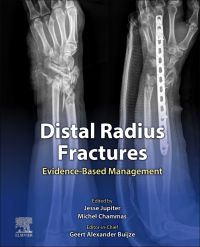
Edited by Geert Alexander Buijze, MD PhD, Hand Surgeon, Jesse Jupiter, MD and Michel Chammas, MD, PhD
Edited and authored by leading international experts, Distal Radius Fractures: Evidence-Based Management provides a state-of-the-art overview of diagnosis and management based on today’s best practices. Each chapter focuses on one key issue, offeri
...view more
Edited and authored by leading international experts, Distal Radius Fractures: Evidence-Based Management provides a state-of-the-art overview of diagnosis and management based on today’s best practices. Each chapter focuses on one key issue, offering a challenging case and then questioning the reader in an engaging fashion to provide the best available evidence on each topic. Practical and easy to read, this innovative text is a useful resource for all residents, physicians and surgeons who manage fractures.
Edited and authored by leading international experts, Distal Radius Fractures: Evidence-Based Management provides a state-of-the-art overview of diagnosis and management based on today’s best practices. Each chapter focuses on one key issue, offering a challenging case and then questioning the reader in an engaging fashion to provide the best available evidence on each topic. Practical and easy to read, this innovative text is a useful resource for all residents, physicians and surgeons who manage fractures.
Key Features
Combines current best practices with the knowledge and experience of a global team of expert contributing authors, with a focus on practical use in applying the evidence.
Covers need-to-know topics such as anatomy and biomechanics, diagnostic management, acute fracture management, management of pediatric and elderly fractures, and more.
Includes valuable case scenarios, technical tips and tricks, and pearls and pitfalls.
Features high-quality illustrations including CT scans, x-rays, and clinical photographs.
Consolidates the latest evidence on distal radius fractures into one convenient resource.
Enhanced eBook version included with purchase, which allows you to access all of the text, figures, and references from the book on a variety of devices.
Author Information
Edited by Geert Alexander Buijze, MD PhD, Hand Surgeon, Hand and upper limb surgeon, Clinique Générale d'Annecy, France. Assistant Professor, University Hospital CHU Montpellier, France, Postdoc, Amsterdam UMC, Netherlands.; Jesse Jupiter, MD, Hansjoerg Wyss/AO Professor, Harvard Medical School, Department Of Orthopedic Surgery, Massachusetts General Hospital, Past President, American Shoulder and Elbow Surgeons, Past President, American Association of Hand Surgery and Michel Chammas, MD, PhD, Professor, Orthopaedic Hand and Upper Extremity Trauma Surgery, University of Montpellier, France
Edited by Geert Alexander Buijze, MD PhD, Hand Surgeon, Hand and upper limb surgeon, Clinique Générale d'Annecy, France. Assistant Professor, University Hospital CHU Montpellier, France, Postdoc, Amsterdam UMC, Netherlands.; Jesse Jupiter, MD, Hansjoerg Wyss/AO Professor, Harvard Medical School, Department Of Orthopedic Surgery, Massachusetts General Hospital, Past President, American Shoulder and Elbow Surgeons, Past President, American Association of Hand Surgery and Michel Chammas, MD, PhD, Professor, Orthopaedic Hand and Upper Extremity Trauma Surgery, University of Montpellier, France
https://www.elsevierhealth.com.au/distal-radius-fractures-9780323757645.html296957Distal Radius Fractureshttps://www.elsevierhealth.com.au/media/catalog/product/9/7/9780323757645_5.jpg161.22214.95AUDInStock/Books/Medicine/Surgery/Books/Books/Dentistry/Oral Pathology/Japan Titles438872250545835054664525503952599215263160Edited and authored by leading international experts, Distal Radius Fractures: Evidence-Based Management provides a state-of-the-art overview of diagnosis and management based on today’s best practices. Each chapter focuses on one key issue, offering a challenging case and then questioning the reader in an engaging fashion to provide the best available evidence on each topic. Practical and easy to read, this innovative text is a useful resource for all residents, physicians and surgeons who manage fractures. Edited and authored by leading international experts, Distal Radius Fractures: Evidence-Based Management provides a state-of-the-art overview of diagnosis and management based on today’s best practices. Each chapter focuses on one key issue, offering a challenging case and then questioning the reader in an engaging fashion to provide the best available evidence on each topic. Practical and easy to read, this innovative text is a useful resource for all residents, physicians and surgeons who manage fractures.00add-to-cart97803237576452021ProfessionalEdited by Geert Alexander Buijze, MD PhD, Hand Surgeon, Jesse Jupiter, MD and Michel Chammas, MD, PhD20221Book191w x 235hElsevier43422 Feb 2021Please allow 7-10 working days for deliveryEdited by <STRONG>Geert Alexander Buijze</STRONG>, MD PhD, Hand Surgeon, Hand and upper limb surgeon, Clinique Générale d'Annecy, France. Assistant Professor, University Hospital CHU Montpellier, France, Postdoc, Amsterdam UMC, Netherlands.; <STRONG>Jesse Jupiter</STRONG>, MD, Hansjoerg Wyss/AO Professor, Harvard Medical School, Department Of Orthopedic Surgery, Massachusetts General Hospital, Past President, American Shoulder and Elbow Surgeons, Past President, American Association of Hand Surgery and <STRONG>Michel Chammas</STRONG>, MD, PhD, Professor, Orthopaedic Hand and Upper Extremity Trauma Surgery, University of Montpellier, FranceBooksBookUnited StatesNoNoNoNoPlease SelectPlease SelectPlease Select